
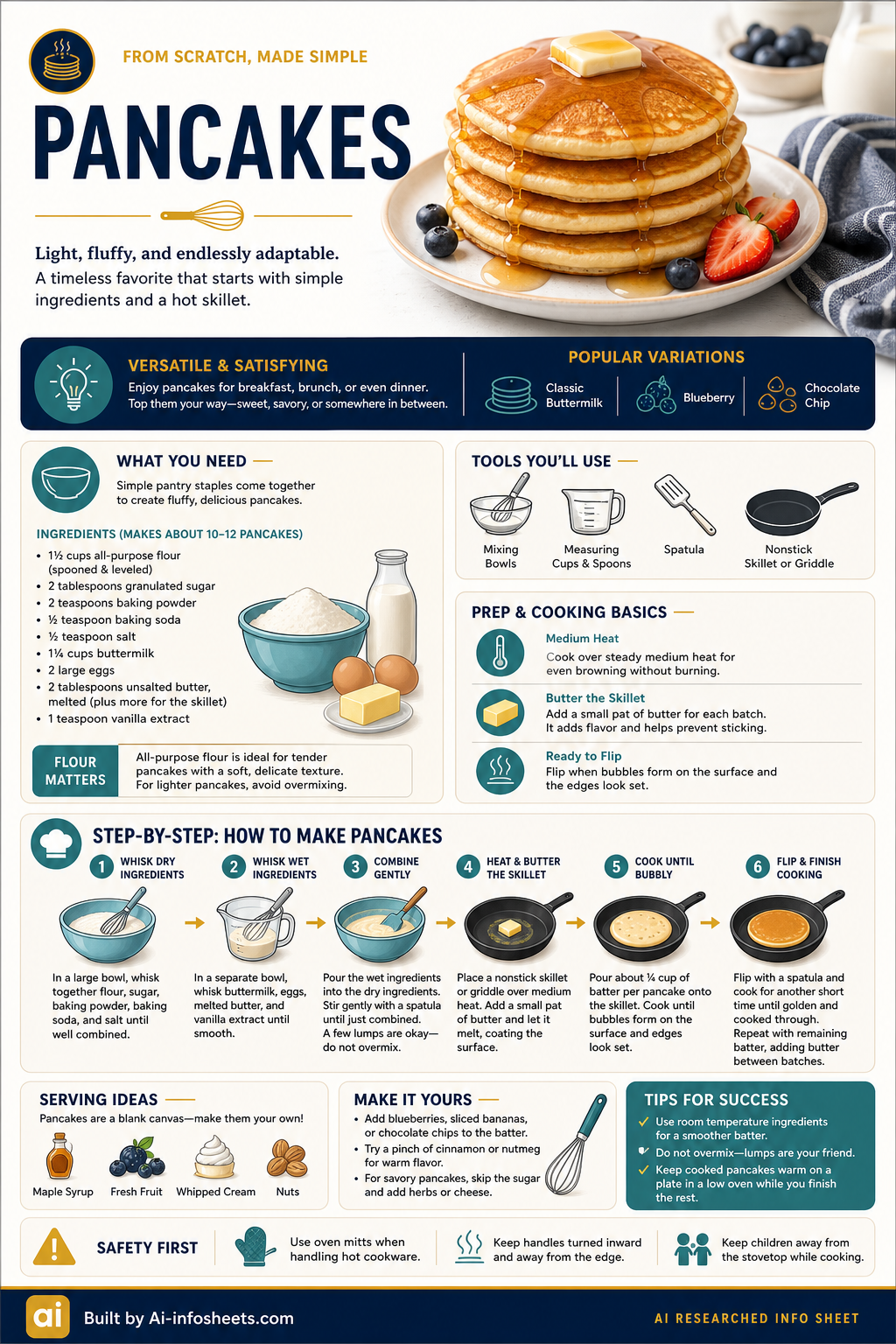


Pancakes are a beloved staple, cherished for their versatility and comforting warmth. Whether enjoyed for breakfast, brunch, or even dinner, these light, fluffy discs offer an endlessly adaptable canvas for both sweet and savory creations. Achieving the perfect pancake—one that's golden-brown, tender, and airy—relies on understanding a few key principles, from ingredient selection to precise cooking techniques. This guide will walk you through the essential steps and tips to master the art of homemade pancakes, ensuring a delicious stack every time.
The Essential Ingredients for Fluffy Pancakes
Crafting superb pancakes begins with quality ingredients and their proper preparation. The following list outlines what you'll need to make approximately 10-12 pancakes, focusing on achieving that coveted fluffy texture.
All-Purpose Flour
All-purpose flour forms the structural base of your pancakes, contributing to their tender and delicate texture. For optimal results, it's crucial to measure flour correctly by spooning it lightly into the measuring cup and leveling it, rather than scooping or packing. This prevents over-measurement, which can lead to tough or dry pancakes.
Granulated Sugar
Sugar sweetens the pancakes, enhances their texture, and aids in achieving a desirable golden-brown color during cooking. While 2 tablespoons are recommended for this recipe, you can adjust the amount based on your preference or omit it entirely for savory variations.
Baking Powder
As a primary leavening agent, baking powder is crucial for creating the light and airy texture characteristic of fluffy pancakes. It reacts when wet and heated, producing carbon dioxide bubbles that expand the batter. For the best rise, ensure your baking powder is fresh, as expired leavening can result in flat pancakes.
Baking Soda
Baking soda works in conjunction with buttermilk, an acidic ingredient, to provide additional lift to the pancakes. Together, these leavening agents create a superior fluffy texture. The recommended amount for this recipe is ½ teaspoon.
Salt
A ½ teaspoon of salt is included to enhance the overall flavor of the pancakes, balancing the sweetness and enriching the taste profile. It also plays a subtle role in influencing the tenderness of the pancakes.
Buttermilk
Buttermilk is a key wet ingredient that contributes to the pancakes' tenderness and tang. Its acidity reacts with baking soda, producing gas that helps the pancakes rise. If you don't have buttermilk, a common substitute involves adding a tablespoon of lemon juice or white vinegar to regular milk and letting it sit for 5-10 minutes before use.
Large Eggs
Eggs serve multiple functions in pancake batter: they add moisture, richness, and act as a binder to hold the ingredients together. They also contribute to the overall structure and lift. This recipe calls for 2 large eggs.
Unsalted Butter
Melted unsalted butter adds a rich flavor and moisture to the batter, contributing to a tender crumb. It's also used to butter the skillet between batches, preventing sticking and adding a nutty taste. The recipe specifies 2 tablespoons for the batter, plus more for cooking.
Vanilla Extract
Vanilla extract is a classic flavor enhancer for pancakes, providing a warm and aromatic note. Just 1 teaspoon can significantly elevate the overall taste. For those looking to customize, cinnamon or nutmeg can also be added for warm spice notes.
Step-by-Step: How to Make Pancakes
Follow these simple steps to prepare perfect, fluffy pancakes every time. Remember, gentle mixing is key to tenderness.
Step 1: Whisk Dry Ingredients
In a large bowl, combine the 1½ cups of all-purpose flour, 2 tablespoons of granulated sugar, 2 teaspoons of baking powder, ½ teaspoon of baking soda, and ½ teaspoon of salt. Whisk them together until they are well combined and no lumps remain.
Step 2: Whisk Wet Ingredients
In a separate medium bowl, whisk together the 1½ cups of buttermilk, 2 large eggs, 2 tablespoons of melted unsalted butter, and 1 teaspoon of vanilla extract. Continue whisking until the mixture is smooth and evenly incorporated.
Step 3: Combine Gently
Pour the wet ingredients into the bowl containing the dry ingredients. Stir gently with a spatula or spoon until just combined. It’s important not to overmix; a few small lumps of flour are perfectly fine and indicate a tender pancake. Overmixing develops gluten, leading to tough pancakes.
Step 4: Heat & Butter the Skillet
Place a nonstick skillet or griddle over medium heat. Once hot, add a small pat of unsalted butter and let it melt, swirling to coat the entire surface. This adds flavor and prevents sticking. Maintain a steady medium heat for even browning without burning.
Step 5: Cook Until Bubbly
Pour about ¼ cup of batter onto the hot skillet for each pancake. Cook for approximately 2-3 minutes, or until bubbles begin to form on the surface and the edges of the pancake look set and slightly dry. This indicates it’s ready to flip.
Step 6: Flip & Finish Cooking
Using a spatula, carefully flip each pancake and cook for another short time, usually 1-2 minutes, until it's golden brown and cooked through. Repeat this process with the remaining batter, adding a small pat of butter to the skillet between batches to maintain flavor and prevent sticking.
Customize and Serve
Pancakes are a blank canvas, ready to be personalized. Consider adding blueberries, sliced bananas, or chocolate chips directly to the batter for a sweet twist. For a savory option, skip the sugar and add herbs or cheese. Serve your warm pancakes with classic maple syrup, fresh fruit, whipped cream, or a sprinkle of nuts. To keep cooked pancakes warm while you finish the rest, place them on a plate in a low oven.
Enjoy your journey to mastering fluffy pancakes! With proper technique and a little practice, you'll be creating perfect stacks that delight family and friends alike. Happy cooking!