
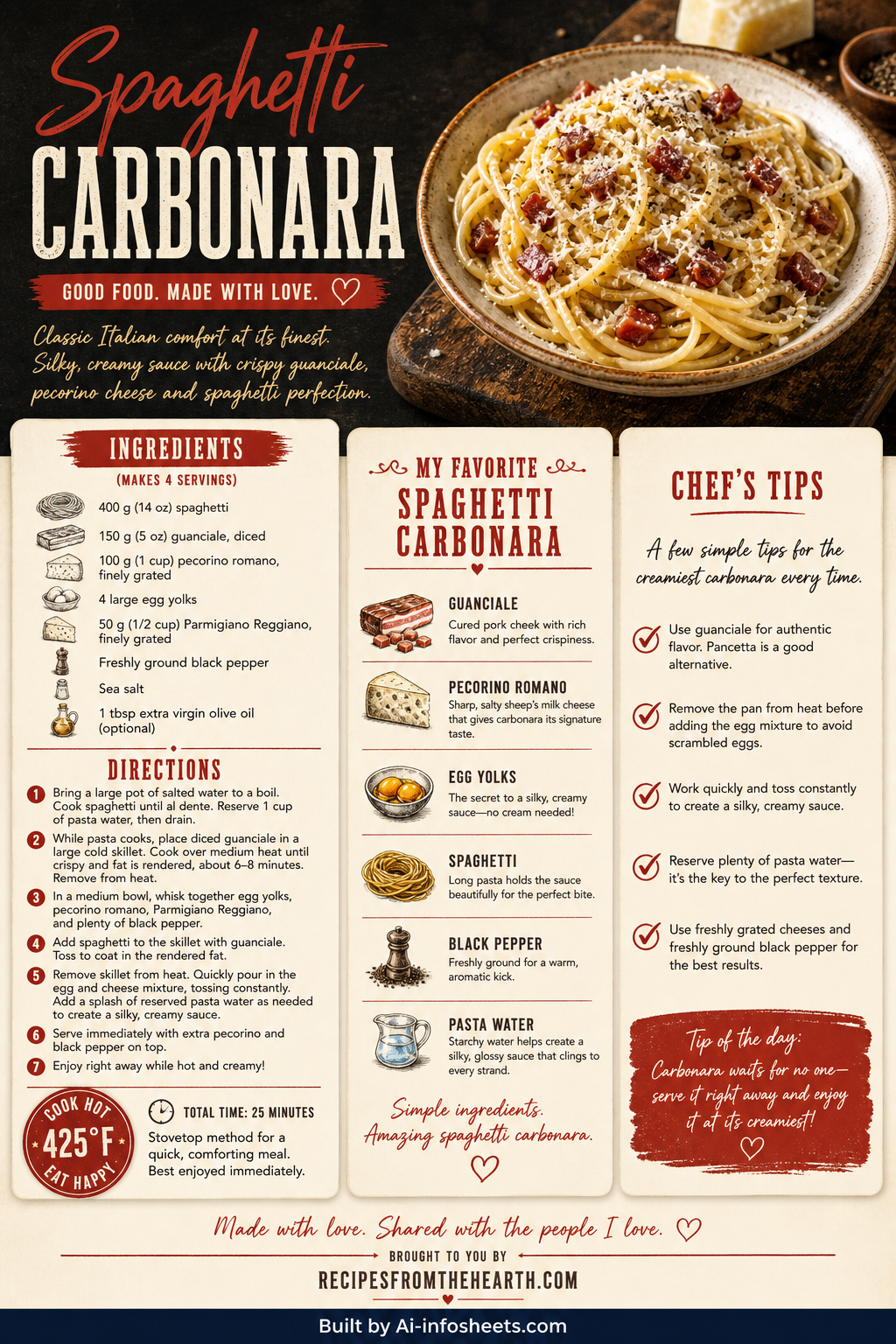


Spaghetti Carbonara stands as a pinnacle of Roman culinary tradition, a deceptively simple dish whose elegance lies in the quality of its few, carefully selected ingredients and the precision of its technique. Far from the cream-laden versions often found outside Italy, authentic Carbonara is a symphony of flavors achieved through cured pork, aged cheese, fresh eggs, and black pepper, bound together by the starchy pasta water. Mastering this iconic dish offers a true taste of Italy and a deep appreciation for the art of Italian cooking.
The True Origin of Carbonara
The exact origins of Spaghetti Carbonara are shrouded in mystery and delightful debate, but most culinary historians agree it emerged in Central Italy, likely Rome, post-World War II. One popular theory suggests it was born from the resourceful cucina povera (poor kitchen) tradition, possibly developed by Italian charcoal workers (carbonari), who could easily carry the non-perishable ingredients like cured pork and cheese. Another theory links its creation to American soldiers in Italy, who brought bacon and eggs, inspiring local chefs to adapt it with available Italian ingredients like guanciale and Pecorino Romano. Regardless of its precise beginning, Carbonara quickly cemented its place as a staple of Roman trattorias.
Essential Ingredients for Authenticity
Crafting a Carbonara that would make a Roman nonna proud requires strict adherence to tradition and a refusal to compromise on key components. The magic lies in the interplay of specific flavors and textures.
Guanciale
Guanciale, cured pork jowl, is non-negotiable for authentic Carbonara. Its unique flavor profile, higher fat content, and silky texture when rendered are distinct from pancetta or bacon. The rendering process yields a crisp exterior and a rich, flavorful fat that forms the foundation of the sauce. Sourcing good quality guanciale is paramount, as its savory depth defines the dish.
Pecorino Romano
Pecorino Romano, a hard, salty sheep's milk cheese, provides the sharp, pungent counterpoint to the rich guanciale. Its granular texture and intense flavor are crucial for the characteristic "piquant" bite of Carbonara. Often confused with Parmigiano Reggiano, Pecorino Romano offers a more assertive taste that is essential for this recipe. Freshly grating it just before use ensures maximum flavor and avoids clumping.
Fresh Eggs
The creamy, emulsified sauce of Carbonara comes solely from eggs, specifically a combination of yolks and whole eggs a common ratio being one whole egg and one additional yolk per serving. The heat from the pasta and the residual heat from the rendered guanciale fat gently cook the eggs, creating a velvety consistency without scrambling them. The quality of the eggs greatly influences the final color and richness of the sauce.
Black Pepper
Freshly cracked black pepper is more than just a seasoning; it's a co-star in Carbonara. Its pungent aroma and spicy kick cut through the richness of the guanciale and cheese, adding complexity. Kampot or Tellicherry varieties offer exceptional flavor. Toasting the peppercorns lightly before cracking can enhance their aromatics even further.
Spaghetti
While other pasta shapes can be used (bucatini, rigatoni), spaghetti is the traditional choice for Carbonara. Its long, thin strands are ideal for coating evenly with the rich, eggy sauce. Cooking the pasta al dente is crucial, as it will continue to cook slightly when combined with the hot sauce. The starchy pasta water, reserved from cooking, is the secret emulsifier that brings the sauce together.
The Art of Preparation
The technique for Carbonara is all about timing and temperature. The process begins by rendering the diced guanciale until crispy, reserving the fat. Separately, beat the eggs and grated Pecorino Romano with a generous amount of freshly cracked black pepper. Cook the spaghetti al dente. The magic happens off the heat: quickly combine the hot pasta with the guanciale, its rendered fat, and the egg-cheese mixture, adding splashes of starchy pasta water to create a smooth, creamy emulsion that clings to every strand. The residual heat from the pasta and the pan gently cooks the egg without scrambling it, achieving that iconic silky texture.
Common Pitfalls and How to Avoid Them
Many aspiring Carbonara makers fall into common traps. Adding cream is the most egregious error, as it deviates entirely from the traditional recipe and results in a heavier, less nuanced dish. Overcooking the eggs, leading to a scrambled texture, is another frequent mistake; this can be avoided by removing the pan from direct heat and stirring vigorously when combining the ingredients. Using bacon or pancetta instead of guanciale will result in a different, less authentic flavor profile. Lastly, skimping on good quality Pecorino Romano or black pepper diminishes the overall impact of the dish. Adhering to the authentic ingredients and technique will guarantee a truly delicious and classic Roman Carbonara every time.
Mastering authentic Spaghetti Carbonara is a culinary journey that rewards patience and respect for tradition. By understanding the role of each ingredient and perfecting the technique, you can recreate this iconic Roman dish in your own kitchen, bringing a taste of Italy to your table. Embark on this delicious adventure and savor the true flavors of Rome.