
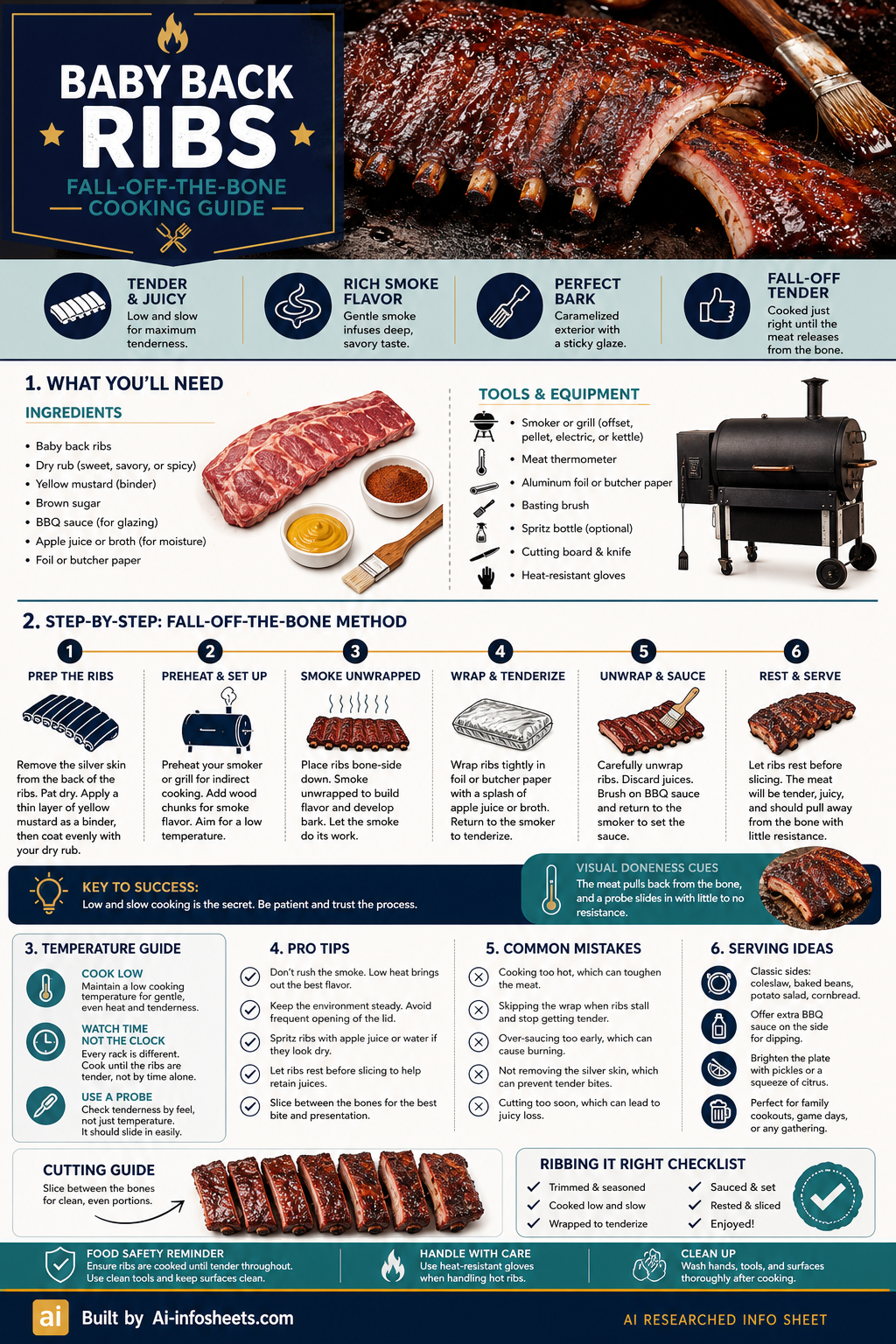
Baby back ribs are a classic barbecue favorite, cherished for their tender meat and rich flavor. Achieving that coveted “fall-off-the-bone” texture requires a specific approach, focusing on low and slow cooking, strategic moisture, and proper seasoning. This comprehensive guide will walk you through each step, from preparation to serving, ensuring your baby back ribs are consistently juicy, flavorful, and incredibly tender.
1. What You'll Need: Essential Ingredients and Tools
To embark on your baby back rib journey, gather the right supplies. The quality of your ingredients and the suitability of your tools significantly impact the final result. For ingredients, you'll need baby back ribs, a dry rub (sweet, savory, or spicy), yellow mustard as a binder, brown sugar, BBQ sauce for glazing, and apple juice or broth for moisture. For cooking, consider a smoker or grill (offset, pellet, electric, or kettle), a meat thermometer, aluminum foil or butcher paper, a basting brush, an optional spritz bottle, a cutting board and knife, and heat-resistant gloves.
2. Step-by-Step: The Fall-Off-The-Bone Method
Follow these six crucial steps to achieve perfectly tender and flavorful baby back ribs.
Step 1: Prep The Ribs
Start by removing the silver skin from the back of the ribs, as this membrane can become tough and prevent the rub from penetrating the meat. Pat the ribs dry thoroughly. Apply a thin layer of yellow mustard; this acts as an excellent binder for your dry rub. Finally, coat the ribs evenly and generously with your chosen dry rub.
Step 2: Preheat & Set Up
Preheat your smoker or grill for indirect cooking, aiming for a low temperature. Add wood chunks to generate smoke flavor. Maintaining a consistent low temperature is key to tenderizing the meat without drying it out.
Step 3: Smoke Unwrapped
Place the prepared ribs bone-side down on the grates. Smoke them unwrapped during this initial phase to allow a flavorful bark to develop. This exposure to smoke creates a deep, savory taste and a desirable crust on the ribs. Let the smoke work its magic, infusing the meat with rich flavor.
Step 4: Wrap & Tenderize
Once the bark has formed, tightly wrap the ribs in foil or butcher paper. Before sealing, add a splash of apple juice or broth inside the wrap to create a moist environment. Return the wrapped ribs to the smoker. This tenderization phase allows the ribs to steam in their own juices, breaking down tough connective tissues.
Step 5: Unwrap & Sauce
Carefully unwrap the ribs, discarding any accumulated juices from the foil or paper. Brush your favorite BBQ sauce generously over the ribs. Return them to the smoker, unwrapped, for a final period to allow the sauce to set and caramelize, forming a delicious glaze.
Step 6: Rest & Serve
Once the ribs are cooked to your desired tenderness, remove them from the smoker and let them rest before slicing. This resting period is vital as it allows the juices to redistribute throughout the meat, ensuring maximum tenderness and juiciness. The meat should pull away from the bone with little resistance.
Key to Success: Temperature Guide and Visual Doneness Cues
The secret to fall-off-the-bone ribs lies in patient, low, and slow cooking. Maintain a low cooking temperature for gentle, even heat distribution and tenderness. Instead of watching the clock, monitor the ribs' doneness. Use a probe to check for tenderness—it should slide in easily. Visually, the meat will pull back from the bone, and a probe should slide in with little to no resistance, indicating perfect doneness.
Pro Tips and Common Mistakes to Avoid
To elevate your rib game, don't rush the smoke; low heat yields the best flavor. Keep your cooking environment steady by avoiding frequent lid opening. Spritz ribs with apple juice or water if they appear dry. Always let ribs rest before slicing to retain juices, and slice between the bones for optimal presentation. Avoid cooking too hot, which toughens the meat, or skipping the wrap, which prevents tenderization. Over-saucing too early can cause burning, and failing to remove the silver skin can result in tough bites. Additionally, cutting too soon will lead to juicy loss.
Serving Ideas
Classic sides that pair well with baby back ribs include coleslaw, baked beans, potato salad, and cornbread. Offer extra BBQ sauce on the side for dipping, and brighten the plate with pickles or a squeeze of citrus. Baby back ribs are perfect for family cookouts, game days, or any gathering.
Mastering baby back ribs is a rewarding endeavor that brings incredible flavor and satisfaction. By following this guide, you’ll consistently achieve ribs that are tender, juicy, and packed with smoky goodness, making you the hero of any barbecue. So fire up your smoker and get ready to enjoy some truly delicious fall-off-the-bone ribs!