
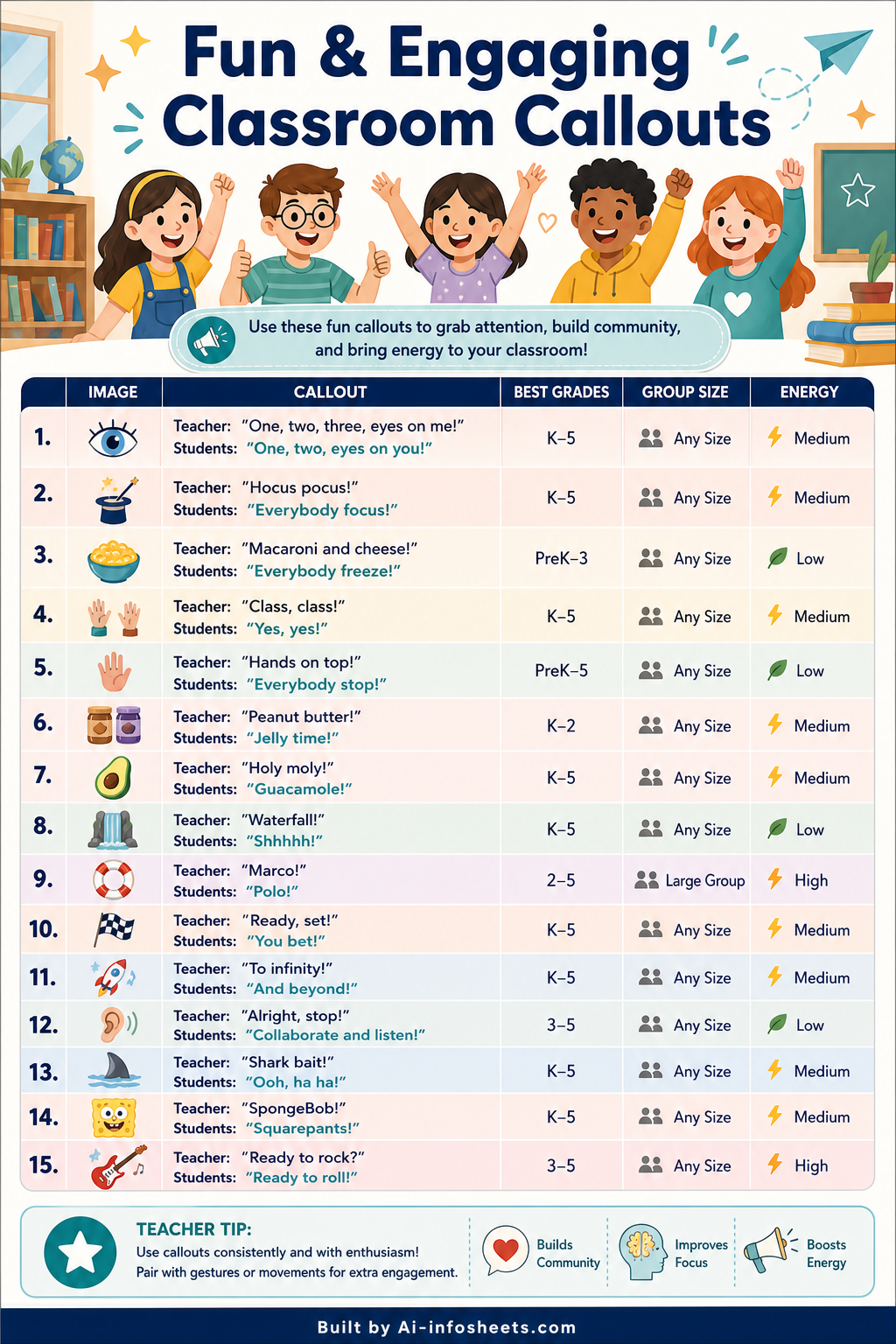
Creating an engaging and responsive classroom environment is crucial for effective learning. Classroom callouts are simple yet powerful tools that teachers can use to garner immediate attention, check for understanding, encourage participation, and manage transitions. By integrating these interactive prompts, educators can foster a more dynamic and focused learning space, making lessons more enjoyable and impactful for students. This guide explores 10 effective callouts that are easy to implement and yield significant benefits in keeping students actively involved and on task.
Boosting Engagement with Interactive Callouts
Classroom callouts serve multiple purposes, from re-focusing distracted students to promoting active recall and ensuring all students feel included. They are particularly effective because they break the routine, involve students verbally or physically, and can be adapted to various age groups and subjects. The key is consistent use and clear expectations, allowing students to anticipate and enjoy these collaborative moments throughout the school day.
1. "Hocus Pocus" – "Everybody Focus!"
This classic call-and-response is excellent for quickly regaining student attention after group work or during transitions. The teacher says "Hocus Pocus," and students respond with "Everybody Focus!" while often taking a moment to stop what they are doing and look at the teacher.
2. "Macaroni and Cheese" – "Everybody Freeze!"
Perfect for when you need students to immediately stop an activity and hold their position. It's particularly useful in lively classrooms or during movement-based lessons. The teacher's call instantly prompts students to pause for instructions or safety.
3. "Class, Class" – "Yes, Yes"
A simple, yet highly effective way to get a group's attention. When the teacher says "Class, Class," students immediately stop talking and respond "Yes, Yes," turning their attention to the teacher. This method emphasizes respect and responsiveness.
4. "One, two, three… eyes on me!" – "One, two… eyes on you!"
This callout is fantastic for younger students, creating a rhythmic and fun way to draw their gaze to the front of the room. The numerical countdown helps them mentally prepare to shift focus and makes it almost a game.
5. "Hands on Top" – "Everybody Stop!"
This physical callout combines a verbal cue with an action, encouraging students to place their hands on their heads or laps as they respond. It's particularly effective for transitioning between loud and quiet activities or when a quick pause is needed.
6. "All Aboard!" – "Choo Choo!"
Ideal for lining up, moving to a new area, or signaling the start of a new activity where collective movement is desired. This playful callout encourages students to assemble and move together as a group, promoting unity and orderliness.
7. "Ready To Learn?" – "Ready!"
Used to assess if students are mentally prepared for the next task or lesson. This ensures students are settled and mentally prepared, reducing the need to repeat instructions multiple times. It encourages active readiness.
8. "Shark Bait!" – "OO-HA-HA!"
This fun and energetic callout is great for re-energizing a group or getting their attention in a light-hearted way. The unexpected response often surprises and delights students, making them more receptive to what comes next.
9. "May I have your attention, please?" – (Raise hand quietly)
This is a more subtle, yet powerful, callout that teaches self-regulation and respectful attention-getting. Instead of shouting, students are cued to simply raise a hand and turn their focus, promoting a quieter, more composed classroom.
10. "Teacher Says…" – (Followed by an instruction)
Similar to "Simon Says," this callout ensures students listen carefully to commands before acting. It's excellent for practicing active listening and following multi-step instructions, making it a versatile tool for various learning activities.
Implementing these engaging classroom callouts can significantly enhance the learning experience by fostering a more interactive, focused, and respectful environment. Experiment with different callouts to find what resonates best with your students and watch their engagement soar. Choose the ones that fit your teaching style and classroom culture to make learning an exciting adventure for everyone involved.