
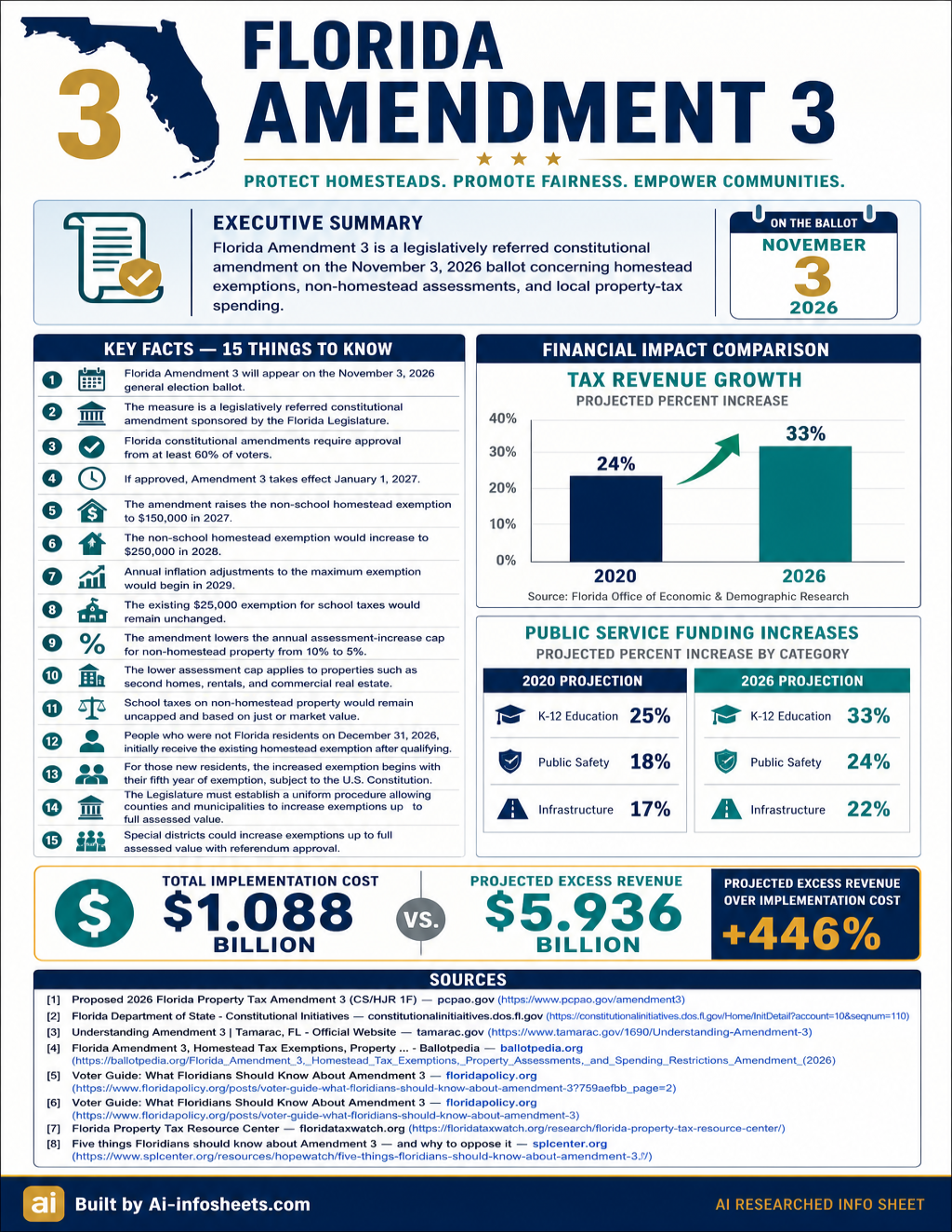


Florida Amendment 3, slated for the November 3, 2026, general election ballot, is a legislatively referred constitutional amendment proposing significant changes to Florida's property tax landscape. It addresses homestead exemptions, non-homestead assessments, and local property-tax revenue. This comprehensive measure, if approved by at least 60% of voters, aims to modify how property taxes are calculated and collected, with broad implications for homeowners, businesses, and public services across the state. Understanding its key provisions and projected financial impacts is crucial for all Floridians.
Key Provisions of Florida Amendment 3
Florida Amendment 3 introduces several changes designed to impact property tax liabilities for both homesteaded and non-homesteaded properties. These provisions are critical for understanding the amendment's potential effects on residents and the state's fiscal health.
Increased Non-School Homestead Exemptions
If approved, Amendment 3 would significantly alter the non-school homestead exemption. The amendment proposes raising this exemption to $150,000 in 2027, then further increasing it to $250,000 in 2028. Starting in 2029, annual inflation adjustments would be applied to the maximum exemption. It's important to note that the existing $25,000 exemption for school taxes would remain unchanged under this amendment, meaning the increases primarily apply to other local millages.
Assessment Cap for Non-Homestead Properties
Another significant change is the reduction of the annual assessment-increase cap for non-homestead properties. This cap would be lowered from 10% to 5%, affecting properties such as second homes, rental units, and commercial real estate. However, school taxes on non-homestead properties would remain uncapped and continue to be based on their just or market value, providing some stability for school funding while offering relief to other non-homestead property owners.
Residency Requirements for New Exemptions
Residents who are established in Florida by December 31, 2026, would qualify for the new, larger exemptions starting in 2027. For individuals who become Florida residents after this date, they would initially receive the existing homestead exemption. The increased exemption would become available to them in their fifth year of exemption, subject to the U.S. Constitution, ensuring a phased eligibility for new residents.
Local Government Flexibility for Exemptions
The amendment also empowers the Florida Legislature to establish a uniform procedure. This procedure would allow counties and municipalities to increase exemptions up to the full assessed value of properties. Additionally, special districts could also increase exemptions up to full assessed value, but only with referendum approval, providing local governments with more control over their property tax structures.
Projected Financial Impact
The financial implications of Florida Amendment 3 are substantial, touching upon tax revenue growth and funding for vital public services. These projections are based on analyses by the Florida Office of Economic & Demographic Research.
Tax Revenue Growth
Under current projections, Florida anticipates a notable increase in tax revenue. The projected percent increase in tax revenue is expected to rise from 24% in 2020 to an estimated 33% by 2026. This growth suggests a healthy trajectory for the state's fiscal outlook, even with the proposed changes to property tax exemptions and assessment caps.
Public Service Funding Increases
Public services are also projected to see increases in funding. For K-12 Education, the projected percent increase is expected to grow from 25% in 2020 to 33% by 2026. Public Safety funding is anticipated to increase from 18% to 24% over the same period. Infrastructure funding is projected to climb from 17% to 22% by 2026. These increases highlight the potential for enhanced investment in critical state functions.
Implementation Cost vs. Excess Revenue
The total implementation cost for Florida Amendment 3 is estimated at $1.088 billion. However, the projected excess revenue is significantly higher, standing at $5.936 billion. This indicates a projected excess revenue over implementation cost of +446%, suggesting a substantial net positive financial impact for the state. This fiscal outlook provides a comprehensive view of the amendment's potential financial benefits.
Conclusion
Florida Amendment 3 presents a multifaceted set of changes that could profoundly impact property owners and public funding. With increased homestead exemptions, a lowered assessment cap for non-homestead properties, and specific residency requirements, the amendment aims to balance property tax relief with the need for stable public services. The projected financial figures, including significant tax revenue growth and excess revenue far exceeding implementation costs, paint a picture of fiscal strength. As the 2026 election approaches, understanding these details will be essential for voters to make an informed decision on this critical constitutional measure.