
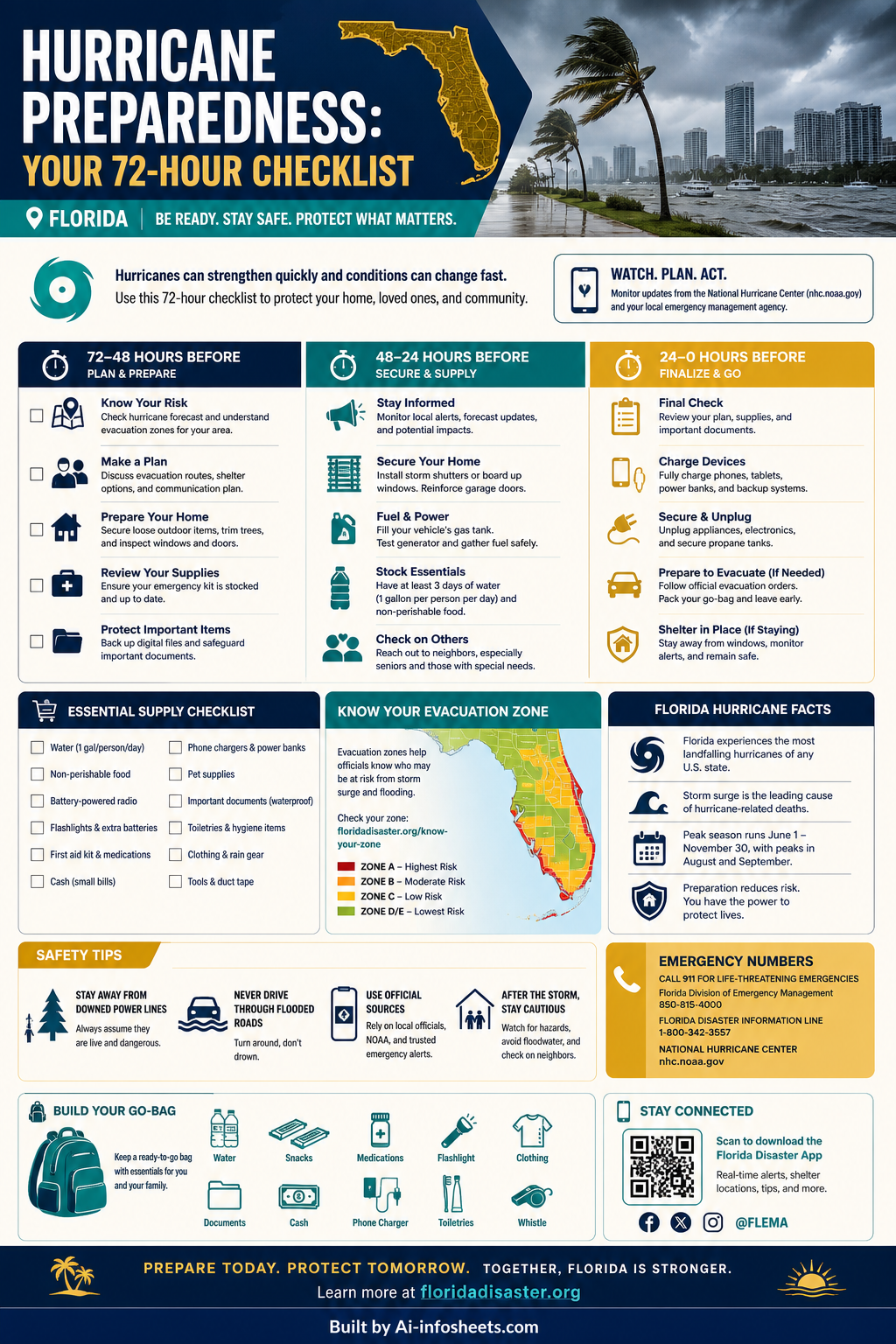


Florida, known for its beautiful coastlines and vibrant communities, is also highly susceptible to hurricanes. The Atlantic hurricane season officially runs from June 1st to November 30th each year, making preparedness not just advisable, but essential for every resident.
A proactive approach to hurricane readiness can significantly reduce risks and enhance safety. This 72-hour checklist is designed to guide you through the critical steps needed to secure your property, gather necessary supplies, and establish a clear emergency plan for you and your family, ensuring you are well-equipped to face potential storm impacts.
72 Hours Before Landfall: Immediate Actions
Secure Your Property Outdoors
Begin by securing anything outdoors that could become a projectile in high winds. This includes patio furniture, garbage cans, grills, trampolines, and any decorative items. Bring them inside or tie them down securely. Trim dead or weak tree branches that could fall and damage your home or power lines. Consider installing hurricane shutters or boarding up windows if instructed by local authorities.
Stock Up on Non-Perishable Food and Water
Ensure you have at least a 72-hour supply of non-perishable food items per person in your household. This includes canned goods, dried fruits, nuts, and protein bars. Crucially, store at least 1 gallon of water per person per day for drinking and sanitation. If you have pets, remember to include their food and water needs as well.
Assemble Your Emergency Kit
Your emergency kit should be easily accessible and contain essentials like a battery-powered or hand-crank radio, flashlights, extra batteries, a whistle to signal for help, and a first-aid kit. Include essential medications, copies of important documents, and cash. Don't forget personal hygiene items, moist towelettes, garbage bags, and local maps.
48 Hours Before Landfall: Family and Communication
Develop a Family Communication Plan
Discuss with your family how you will communicate if separated. Designate an out-of-state contact person whom all family members can call or text to check in. Write down important phone numbers, as cell service may be unreliable. Ensure everyone knows evacuation routes and reunification points.
Charge All Electronic Devices
Fully charge cell phones, laptops, and any portable power banks. These devices will be crucial for communication and staying informed if power outages occur. It's also wise to have car chargers ready if you plan on evacuating.
Fill Your Vehicle's Fuel Tank
Before a storm hits, gas stations may close or run out of fuel. Fill your car's fuel tank, as this can be vital for evacuation or powering small generators if needed. You may also need to move your car to higher ground.
24 Hours Before Landfall: Final Preparations
Stay Informed and Follow Local Guidance
Listen to local news, weather radio, or official government websites for the latest hurricane updates and emergency instructions. Heed all warnings and evacuation orders from local authorities immediately. Knowing current conditions and expected impacts allows you to make timely decisions.
Prepare for Power Outages
Turn your refrigerator and freezer to the coldest settings to keep food fresh longer in case of a power outage. Have coolers with ice ready to transfer perishable items. Unplug non-essential electronics to protect them from power surges when electricity is restored.
Review Evacuation Routes and Shelter Information
If an evacuation order is issued for your area, know your designated routes and where local shelters are located. Have a "go-bag" packed with essentials ready to take with you immediately. Information on shelters is typically available from local emergency management agencies.
Preparing for a hurricane can seem daunting, but by following a structured checklist, you can significantly enhance your safety and peace of mind. Taking these steps well in advance of a storm's arrival is key to protecting yourself, your family, and your property. Stay informed, stay prepared, and stay safe.