
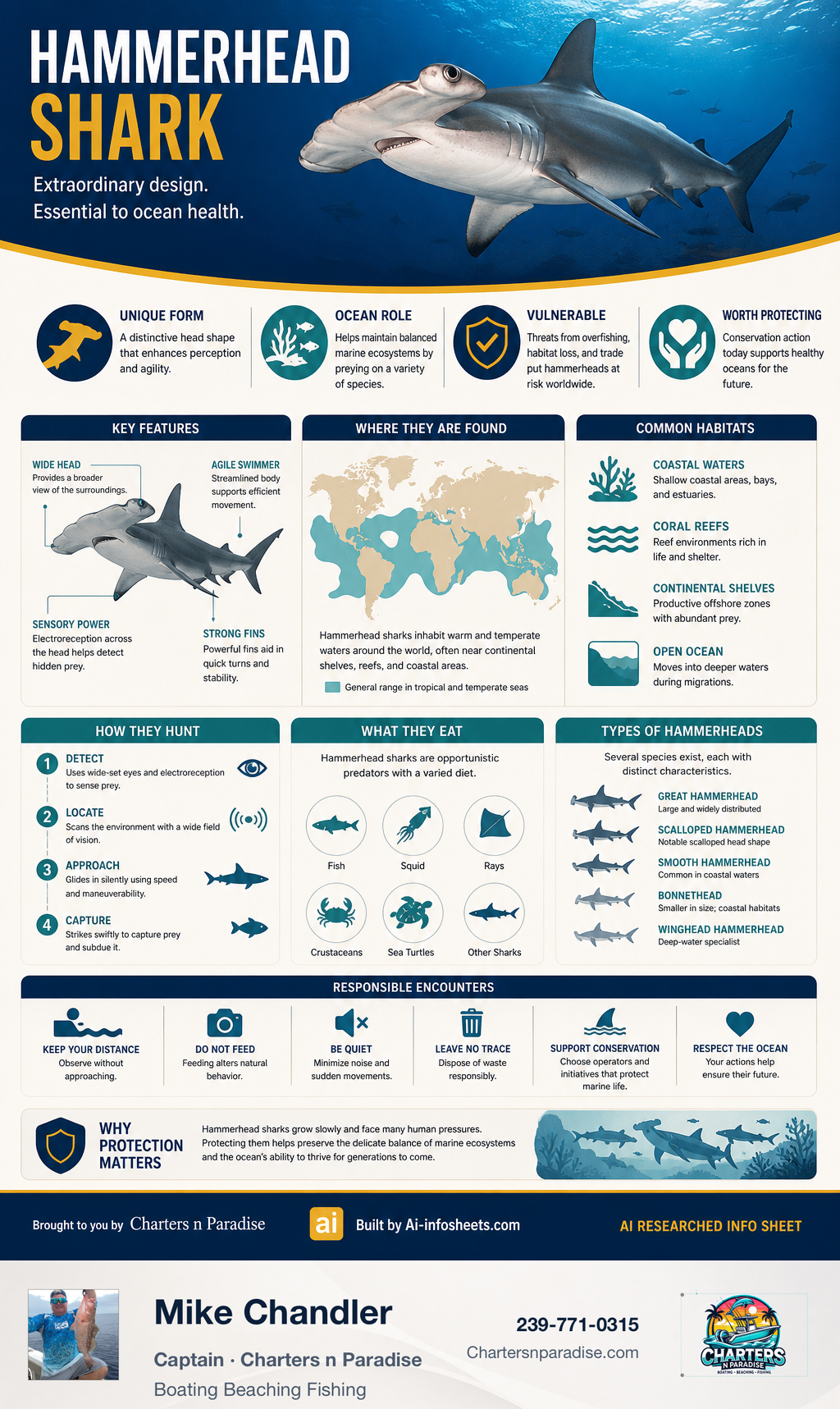


Hammerhead sharks are among the ocean's most distinctive and fascinating predators, recognized globally for their unique T-shaped heads. This remarkable evolutionary adaptation is not merely for aesthetics; it plays a crucial role in their ability to sense, locate, and capture prey, making them highly efficient hunters. Beyond their hunting prowess, hammerheads are integral to the health and balance of marine ecosystems worldwide. Understanding their unique characteristics, habitats, and the challenges they face is vital for appreciating their significance and supporting ongoing conservation efforts.
The Unique Anatomy and Hunting Strategy of Hammerhead Sharks
The most prominent feature of the hammerhead shark is, undoubtedly, its distinctive head. This 'cephalofoil' provides several advantages. A wide head offers a broader field of vision, allowing them to scan their surroundings more effectively. Furthermore, the spread-out sensory organs enhance their sensory power, particularly electroreception, enabling them to detect the faint electrical fields emitted by hidden prey, even those buried in the sand. This unique form also contributes to their agility, with a streamlined body supporting efficient movement and strong fins aiding in quick turns and stability.
Hunting for a hammerhead shark is a four-step process. First, they detect prey using their wide-set eyes and advanced electroreception. Once detected, they locate the target by scanning the environment with their expansive field of vision. They then approach stealthily, gliding through the water with remarkable speed and maneuverability. Finally, they capture their prey with a swift strike, subduing it efficiently. Their diet is varied, making them opportunistic predators. They primarily feed on fish, squid, and rays, but also consume crustaceans, sea turtles, and even other sharks.
Habitats and Global Distribution
Hammerhead sharks are found in warm and temperate waters around the globe. Their general range includes tropical and temperate seas, often close to continental shelves, reefs, and coastal areas. They thrive in diverse marine environments, adapting their behavior and movements to suit specific conditions.
Coastal Waters
Shallow coastal areas, bays, and estuaries provide essential feeding grounds and nursery areas for many hammerhead species, particularly younger individuals.
Coral Reefs
These vibrant ecosystems offer rich foraging opportunities and shelter, attracting hammerheads with their abundant marine life.
Continental Shelves
Productive offshore zones with ample prey make continental shelves prime hunting grounds for larger hammerheads.
Open Ocean
Some species are known to move into deeper waters and undertake significant migrations across the open ocean, often following food sources or seasonal temperature changes.
Five Distinct Hammerhead Species
While all hammerheads share the characteristic head shape, there are several distinct species, each with unique features and ecological roles.
Great Hammerhead
As the largest of the hammerhead species, the Great Hammerhead (Sphyrna mokarran) is widely distributed across tropical and warm temperate waters. They are formidable predators, known to consume a wide variety of prey, including other sharks and stingrays. Their size and broad distribution make them a significant component of many marine ecosystems.
Scalloped Hammerhead
Recognizable by its distinctive scalloped head shape, the Scalloped Hammerhead (Sphyrna lewini) is a highly migratory species. These sharks often form large schools, especially juveniles, and are found in tropical and warm temperate waters worldwide. They are known for their strong electroreception, which aids in detecting prey.
Smooth Hammerhead
Common in coastal waters, the Smooth Hammerhead (Sphyrna zygaena) has a less pronounced indentation in the center of its head compared to the scalloped hammerhead. They are one of the larger hammerhead species and are often found in temperate zones, including cooler waters than some of their tropical relatives. Their diet is diverse, including fish, cephalopods, and other sharks.
Bonnethead
Smaller in size and inhabiting coastal environments like estuaries and bays, the Bonnethead (Sphyrna tiburo) is unique for its shovel-shaped head. This species is omnivorous, with a diet that includes crabs, shrimp, and even seagrass, making it a fascinating outlier among sharks. They are primarily found in the tropical and subtropical waters of the Americas.
Winghead Hammerhead
A specialist of deep-water habitats, the Winghead Hammerhead (Eusphyra blochii) is distinguished by its extremely elongated cephalofoil, which is much wider relative to its body length than any other hammerhead species. This unique head shape is thought to enhance its sensory capabilities in the murky depths where it resides. They are primarily found in the Indo-West Pacific region.
Conservation and Responsible Encounters
Hammerhead sharks are vulnerable to various threats, including overfishing, habitat loss, and the global trade in shark fins, putting them at risk worldwide. They grow slowly and face many human pressures, which makes their populations particularly susceptible. Protecting these majestic creatures is paramount because they are worth protecting and play a crucial role in maintaining balanced marine ecosystems. Conservation efforts are essential to ensure the health of our oceans for future generations. When encountering hammerheads or other marine life, responsible behavior is key: keep your distance, do not feed them, be quiet to avoid startling them, leave no trace of waste, and support conservation by choosing operators and initiatives that protect marine life. By respecting the ocean, your actions can help ensure a thriving future for hammerhead sharks and the entire marine environment.
Protecting hammerhead sharks is a collective responsibility. By understanding their importance and adopting responsible practices, we can contribute to the preservation of these extraordinary ocean dwellers and the vital ecosystems they support.