
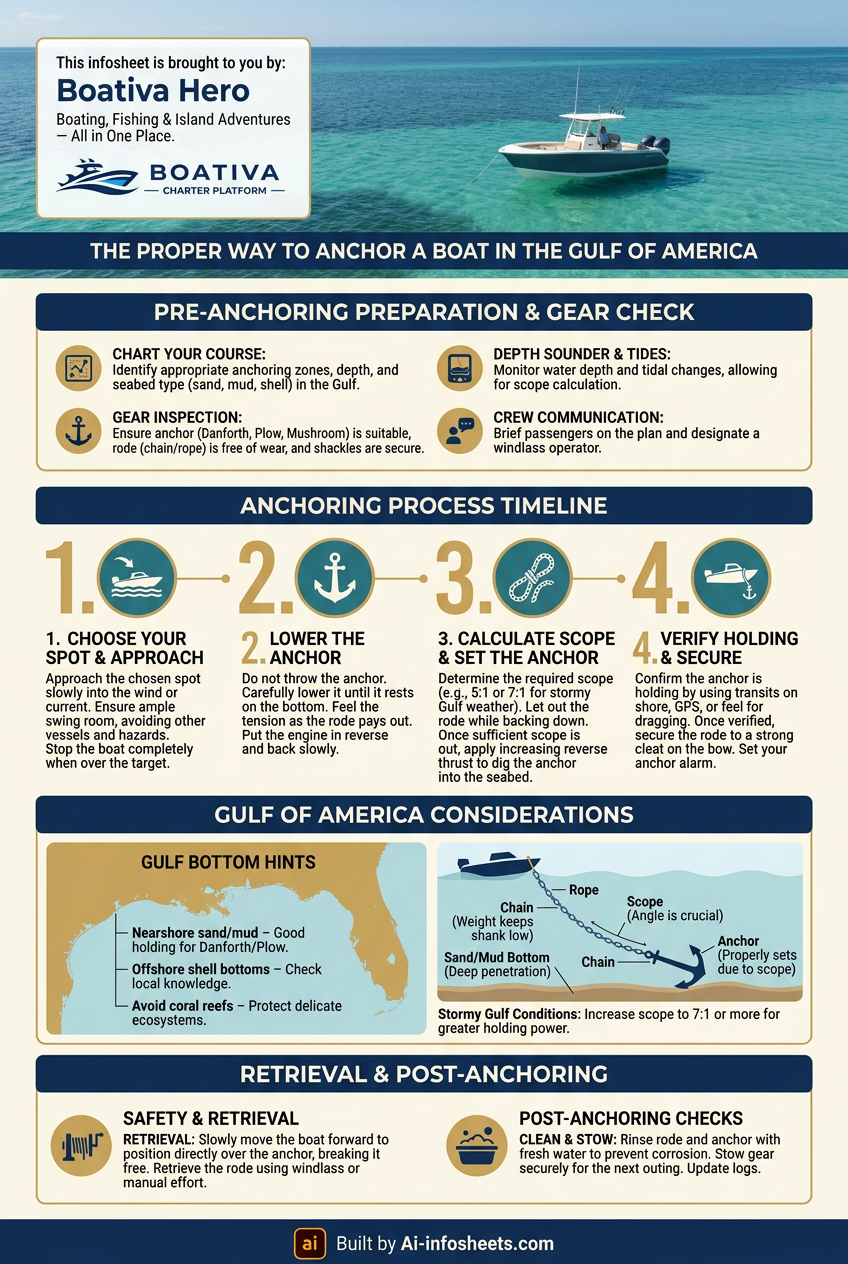
Anchoring a boat in the Gulf of Mexico requires more than just dropping a hook. Proper anchoring is fundamental for the safety of your vessel and its occupants, and equally important for preserving the delicate marine ecosystems beneath the surface. From understanding local regulations to selecting the appropriate equipment and mastering deployment techniques, a comprehensive approach ensures a secure hold and minimizes environmental impact. This guide will walk you through the essential steps and considerations for anchoring effectively and responsibly in the diverse waters of the Gulf.
Choosing the Right Anchor for Gulf Seabeds
The Gulf of Mexico features a variety of seabeds, each requiring a specific anchor design for optimal holding power. Matching your anchor to the seabed is the first critical step in ensuring a secure set.
Fluke (Danforth-style) Anchors
Fluke anchors are highly effective in soft seabeds such as sand and mud, which are prevalent throughout much of the Gulf. Their large, pointed flukes dig deep into the substrate, providing excellent holding power. They are generally lightweight and easy to stow, making them a popular choice for many recreational boaters. However, they may struggle to set in rocky or heavily vegetated areas.
Plow (CQR/Delta-style) Anchors
Plow anchors, including CQR and Delta designs, are versatile and perform well in a wider range of conditions, including sand, mud, and some rocky bottoms. Their design allows them to self-right and dig in effectively as tension is applied. These anchors are known for their consistent holding power even with changing current or wind direction, making them a reliable option for extended stays.
Claw (Bruce-style) Anchors
Claw anchors are also quite versatile and are particularly good at setting quickly in soft to medium hard seabeds. Their distinctive claw-like shape allows them to dig in readily and hold well in sand, mud, and even coral (though anchoring near coral should be avoided to prevent damage). They are popular for their fast setting capabilities and strong holding power once embedded.
Proper Anchoring Techniques for the Gulf
Effective anchoring involves more than just dropping your gear; it requires a calculated approach to ensure safety and prevent environmental harm.
Assessing the Location and Conditions
Before deploying your anchor, always assess conditions. Check the depth, monitor wind and current directions, and identify any nearby hazards like reefs or navigation channels. Observe the seabed type if possible using a depth sounder or charts. Aim to anchor in sand or mud whenever possible to protect sensitive habitats like seagrass beds and coral reefs, which are vital components of the Gulf ecosystem.
Determining Scope and Deployment
Scope refers to the ratio of the length of anchor rode (chain and line) to the depth of the water. For most conditions in the Gulf, a minimum scope of 5:1 (5 feet of rode for every 1 foot of depth) is recommended, with 7:1 or even 10:1 preferred in rougher weather or overnight stays. Begin positioning your boat so you approach the desired anchor spot directly into the wind or current. Drop your anchor gently to avoid tangling, and slowly reverse away as you pay out your rode, allowing the anchor to dig in. Once the desired scope is out, apply steady tension to ensure the anchor is properly set.
Verifying the Set and Monitoring
After deployment, "test" the set by slowly reversing your boat against the anchor's pull to feel it hold firm. Use landmarks or a GPS anchor alarm to monitor your position and ensure the anchor isn't dragging. Dragging can cause significant damage to the seabed and put your boat at risk. Monitor weather changes and marine forecasts, as increased wind or current may necessitate adjusting your scope or re-anchoring.
Responsible Anchor Retrieval
Retrieving your anchor properly is just as important as deployment, both for safety and environmental reasons.
Slow and Steady Retrieval
Motor slowly towards your anchor, taking up slack in the rode as you go. Ideally, you should approach directly over the anchor's position. This reduces strain on your anchor windlass and helps prevent your anchor from becoming fouled. Once directly above, pull the rode vertically until the anchor breaks free from the seabed. Avoid dragging the anchor for long distances along the bottom, as this can damage marine life.
Cleaning and Stowing
As the anchor comes aboard, clean off any mud, sand, or marine debris to prevent it from entering your boat's bilge or contaminating other gear. Securely stow your anchor in its designated locker or holder, ensuring it won't swing free or cause injury while underway. Always be mindful of any attached marine growth and try to remove it before it comes fully out of the water to minimize the spread of invasive species.
Mastering proper anchoring techniques is a hallmark of a responsible boater. By understanding anchor types, practicing careful deployment, and retrieving with respect for the environment, you contribute to a safer, more enjoyable experience in the magnificent Gulf of Mexico. Always prioritize safety, check local regulations, and strive to protect the waters we all cherish.
For more detailed information on boating safety and environmental practices, consult resources from the U.S. Coast Guard, NOAA, and local marine conservation organizations.