
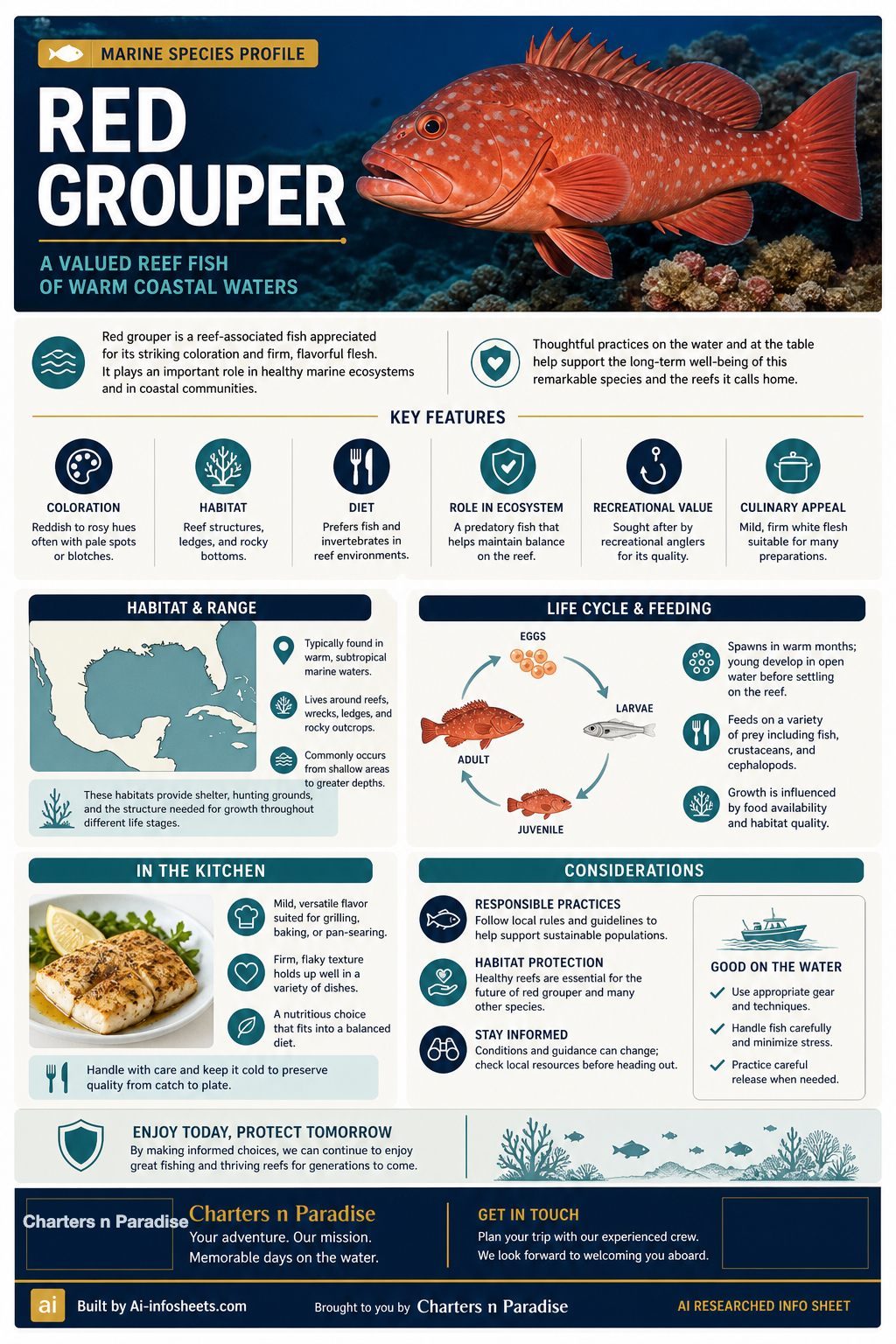


The red grouper (Epinephelus morio) stands out as a highly valued reef fish in warm coastal waters, cherished for its striking coloration and firm, flavorful flesh. Beyond its appeal to anglers and diners, this species plays a crucial ecological role in maintaining the balance of marine ecosystems. Understanding its biology, habitat, and the considerations for its management is key to ensuring the long-term well-being of both the red grouper and the vibrant reef environments it calls home. This comprehensive guide provides an in-depth look at this remarkable fish, from its distinguishing features to responsible practices for enjoyment and conservation.
Key Characteristics of the Red Grouper
The red grouper is easily identifiable by several distinct features that set it apart in its marine environment.
Coloration
The red grouper typically exhibits reddish to rosy hues, often adorned with pale spots or blotches across its body. This distinctive coloring provides effective camouflage among the coral and rocky structures of its habitat.
Habitat
This species primarily inhabits reef structures, ledges, and rocky bottoms. These complex environments offer essential shelter, hunting grounds, and nursery areas for red grouper throughout their various life stages. Red grouper are typically found in warm, subtropical marine waters and commonly occur from shallow areas down to greater depths.
Diet
As a predatory fish, the red grouper’s diet consists mainly of fish and invertebrates found within reef environments. This diet contributes to its role as a key predator, helping to regulate prey populations and maintain ecological balance on the reef.
Role in Ecosystem
Serving as a significant predatory fish, the red grouper plays a vital role in reef ecosystems. By preying on other fish and invertebrates, it helps maintain the health and balance of the marine food web.
Recreational Value
Red grouper are highly sought after by recreational anglers due to their quality and the exciting challenge they present. Their popularity contributes significantly to coastal economies and fishing cultures.
Culinary Appeal
Prized for its culinary versatility, the red grouper offers mild, firm white flesh that is suitable for a wide array of preparations. It holds up well to grilling, baking, or pan-searing and is considered a nutritious choice that complements a balanced diet.
Life Cycle and Feeding
The red grouper undergoes a fascinating life cycle, from tiny eggs to a mature adult, with specific feeding habits at each stage.
Spawning and Development
Red grouper typically spawn during warm months. Their young develop in open water before eventually settling on the reef, where they find protection and sustenance. Growth and development are significantly influenced by the availability of food and the quality of their habitat.
Feeding Habits
Throughout its life, the red grouper feeds on a diverse array of prey, including various fish species, crustaceans, and cephalopods. This varied diet supports its growth and reinforces its position as an important predator within its ecosystem.
Responsible Practices and Conservation
Protecting the red grouper and its habitat requires thoughtful practices from everyone involved, from anglers to consumers.
Responsible Practices
Adhering to local rules and guidelines is paramount to supporting sustainable red grouper populations. These regulations often include size limits, bag limits, and seasonal closures designed to prevent overfishing and protect spawning stocks.
Habitat Protection
Healthy reef habitats are essential not only for the red grouper but also for countless other marine species. Efforts to protect and restore reef structures, ledges, and rocky bottoms are critical for the future of these ecosystems.
Staying Informed
Conditions and guidance related to fishing regulations and conservation efforts can change. Anglers and consumers should consistently check local resources and official marine fishery websites for the latest information before heading out or making purchasing decisions.
Good on the Water
Anglers can contribute to conservation by using appropriate gear and techniques, handling fish carefully to minimize stress, and practicing careful release for fish that are not kept. These actions help ensure the survival of released fish and the health of the overall population.
Enjoy Today, Protect Tomorrow
The red grouper is a vital part of marine ecosystems and a cherished resource for coastal communities. By making informed choices regarding fishing, consumption, and supporting conservation efforts, we can all contribute to enjoying great fishing and thriving reefs for generations to come. Responsible practices ensure that this remarkable species continues to flourish in its warm coastal waters.