
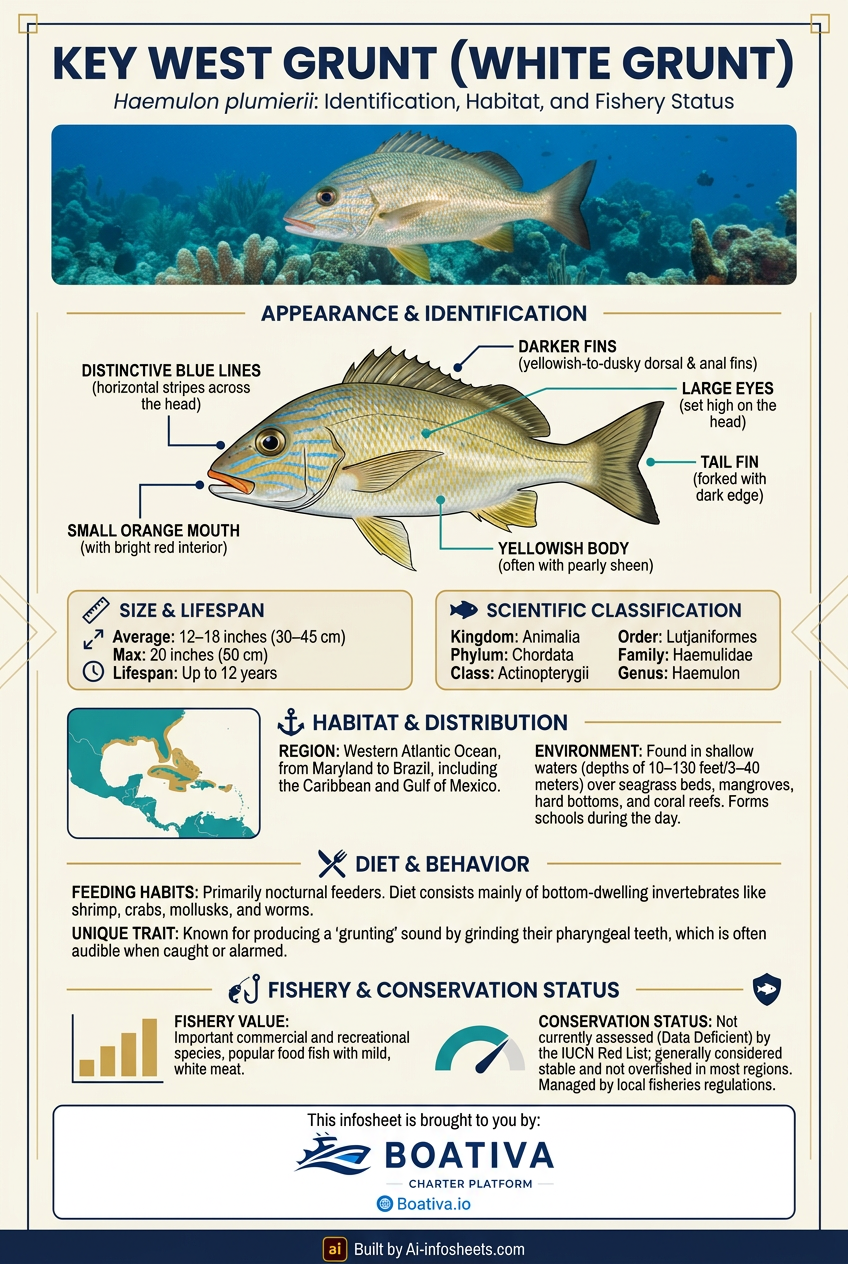
The white grunt, scientifically known as Haemulon plumierii, is a common and highly sought-after fish species throughout the tropical and subtropical waters of the Western Atlantic, with a significant presence in the Florida Keys, particularly around Key West. Named for the distinct grunting sound they produce by grinding their pharyngeal teeth, these fish are not only a popular target for recreational anglers due to their abundance and fighting spirit but also a favored table fare for their flaky, white meat. Understanding the characteristics, habitat, and behaviors of the white grunt is essential for both conservation and successful angling in this vibrant marine ecosystem.
Understanding the White Grunt (Haemulon plumierii)
White grunts are easily recognizable members of the grunt family (Haemulidae). They are characterized by their silvery-gray body with distinctive horizontal yellow stripes, particularly prominent on their head and along their sides. Their fins are typically yellowish, and they possess relatively large scales. An interesting feature is the presence of orange or reddish coloration inside their mouths. These fish typically reach lengths of around 12-18 inches (<stats.0.value><stats.0.unit>), though some individuals can grow up to 20 inches (<stats.1.value><stats.1.unit>) or more, with weights averaging <stats.2.value> to <stats.3.value><stats.2.unit> (<stats.2.sourceIndex>).
Habitat and Distribution
White grunts thrive in a variety of marine environments, predominantly preferring hard-bottomed areas such as coral reefs, rocky outcrops, and seagrass beds. In Key West, they are frequently found around patch reefs, ledges, and channels. Juveniles often inhabit seagrass beds and mangroves, which provide protection from predators. As they mature, they move to deeper reef structures, typically ranging from shallow depths of a few feet up to <stats.4.value> feet (<stats.4.unit>) deep (<stats.4.sourceIndex>). They are nocturnal feeders, dispersing from their daytime schooling areas to forage on small invertebrates like crustaceans, worms, and mollusks under the cover of darkness.
Fishing Techniques and Baits
Fishing for white grunts in Key West is a popular activity, enjoyed by anglers of all skill levels. They are generally caught using light tackle, which provides an exciting fight for their size. The most effective methods typically involve bottom fishing. Common baits include small pieces of cut squid, shrimp, and small live baits such as pilchards or pinfish. Anglers often use a simple bottom rig with a sinker and one or two hooks. Due to their schooling nature, once you find one grunt, you're likely to find more in the same vicinity. Fishing around structure, especially during early morning or late afternoon hours, tends to be most productive.
Culinary Value and Preparation
Beyond their appeal to anglers, white grunts are highly regarded for their culinary qualities. Their meat is white, firm, and flaky, with a mild flavor, making them versatile for various cooking methods. They can be fried, baked, grilled, or even prepared as ceviche. Many local restaurants in Key West feature white grunt on their menus, often serving it whole or as fillets. Proper handling and immediate icing after catch are crucial to maintaining the quality of the meat.
Conservation and Regulations
As a prevalent species, white grunts are generally not considered overfished, but responsible angling practices are always encouraged. In Florida, there are specific regulations regarding bag limits and minimum size requirements for grunts, which are subject to change. Anglers should always consult the latest Florida Fish and Wildlife Conservation Commission (FWC) regulations before heading out. Releasing smaller fish unharmed ensures the sustainability of the population for future generations of anglers and maintains the ecological balance of the Key West marine environment.
Whether you're targeting them for sport or for the dinner table, the white grunt offers a rewarding fishing experience in Key West. Their abundance, fighting spirit, and delicious flavor make them a true gem of the Florida Keys' marine life. Understanding these fascinating fish will undoubtedly enhance your next fishing adventure.