
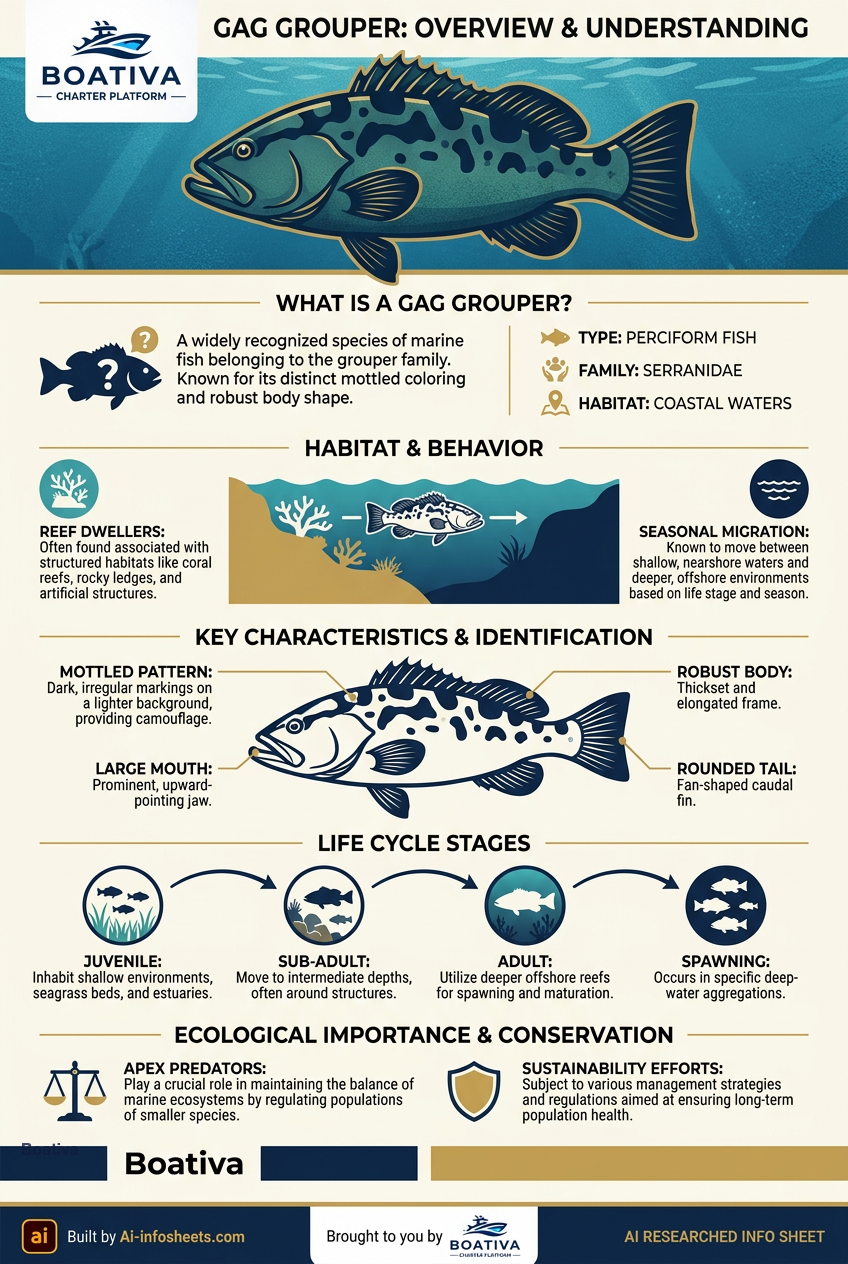


The Gag Grouper (Mycteroperca microlepis) is a highly recognized marine fish species, playing an integral role in the health of coastal ecosystems. A member of the grouper family, it is distinguished by its unique mottled coloring and robust body shape. Understanding this fascinating species—from its physical attributes to its ecological importance and life stages—is crucial for effective marine conservation and sustainable fishing practices. As an apex predator, the Gag Grouper helps maintain the balance of marine life, making its study and protection vital.
What is a Gag Grouper?
The Gag Grouper belongs to the diverse grouper family (Serranidae), specifically classified as a Perciform fish. It is widely distributed across the Western Atlantic, including the Gulf of Mexico and the Caribbean Sea. These fish are known for their distinct appearance, characterized by dark, irregular markings over a lighter background, providing excellent camouflage against reef structures. Their robust, thickset, and elongated bodies allow them to navigate complex marine environments efficiently. Gag Groupers are highly valued both commercially and recreationally, underscoring the importance of their sustainable management.
Habitat and Behavior
Gag Groupers are predominantly reef dwellers, often found inhabiting structured marine environments. This includes natural formations such as coral reefs and rocky ledges, as well as artificial structures like shipwrecks and offshore platforms. Their preference for these complex habitats provides them with shelter from predators and ample opportunities for ambush hunting. The species exhibits seasonal migration patterns, moving between shallow, nearshore waters and deeper, offshore environments. These movements are influenced by various factors, including their life stage and the changing seasons, often in pursuit of optimal feeding and spawning grounds.
Key Characteristics and Identification
Identifying a Gag Grouper involves observing several distinct physical traits:
Mottled Pattern
One of the most defining features of the Gag Grouper is its mottled pattern. This consists of dark, irregular, worm-like markings set against a lighter, often gray or brownish, background. This intricate pattern serves as excellent camouflage, allowing the fish to blend seamlessly with its varied surroundings, from coral formations to sandy bottoms, aiding in both hunting and evading predators.
Robust Body
The Gag Grouper possesses a thickset and elongated frame, contributing to its robust body shape. This sturdy build is characteristic of many grouper species, enabling powerful bursts of speed and strong maneuvering capabilities within its structured habitats. The overall body profile is designed for efficiency in its predatory lifestyle and for navigating turbulent reef environments.
Large Mouth
A prominent feature of the Gag Grouper is its large mouth, which typically has an upward-pointing jaw. This adaptation is crucial for its predatory feeding strategy. The large mouth allows the Gag Grouper to engulf prey whole, creating a vacuum when it opens its mouth rapidly. This makes it an efficient hunter of smaller fish, crustaceans, and other invertebrates found in its coastal habitat.
Rounded Tail
The Gag Grouper's caudal fin, or tail, is typically rounded. This rounded tail, while not designed for sustained high-speed swimming, provides excellent maneuverability and control, particularly useful for navigating complex reef structures and making quick, precise movements when ambushing prey or seeking shelter. This shape distinguishes it from some other fast-swimming pelagic species with more forked tails.
Life Cycle Stages
The Gag Grouper undergoes several distinct life cycle stages, each with specific habitat and behavioral characteristics:
Juvenile
Juvenile Gag Groupers typically inhabit shallow environments, including seagrass beds and estuaries. These nursery habitats provide protection from larger predators and an abundance of food resources, allowing the young fish to grow and develop before venturing into deeper waters. The warmer, nutrient-rich shallow waters are ideal for their initial growth phase.
Sub-Adult
As Gag Groupers mature into sub-adults, they begin to move into intermediate depths, often congregating around structures. These intermediate habitats offer a transition zone between the protected shallow nurseries and the deeper adult grounds, providing a balance of foraging opportunities and shelter as they continue to grow and prepare for reproductive maturity.
Adult
Adult Gag Groupers utilize deeper offshore reefs for spawning and maturation. These deeper waters provide stable environments for large aggregations and are often associated with complex reef systems that offer suitable conditions for reproduction. Adults are typically larger and more experienced hunters, playing a significant role in the food web of these deeper ecosystems.
Spawning
Spawning in Gag Groupers occurs in specific deep-water aggregations. During this period, large numbers of adult fish gather in particular offshore locations to reproduce. This synchronized spawning behavior is critical for the continuation of the species, ensuring fertilization and the dispersal of larvae into the wider marine environment.
Ecological Importance and Conservation
Apex Predators
Gag Groupers are vital apex predators within their marine ecosystems. They play a crucial role in maintaining the balance of these environments by regulating the populations of smaller fish and invertebrate species. By controlling prey numbers, they help prevent overgrazing and promote biodiversity, contributing to a healthier and more resilient marine food web.
Sustainability Efforts
Given their ecological and economic importance, Gag Groupers are subject to various management strategies and regulations. These efforts are aimed at ensuring the long-term health and sustainability of their populations. Regulations often include size limits, bag limits, seasonal closures, and protected areas, all designed to prevent overfishing and allow the species to reproduce and thrive. Continued research and adaptive management are essential for the ongoing conservation of Gag Grouper populations.
The Gag Grouper stands as a testament to the intricate beauty and delicate balance of marine ecosystems. By understanding its biology, behavior, and the threats it faces, we can better contribute to its conservation and ensure that this remarkable species continues to thrive for generations to come.