
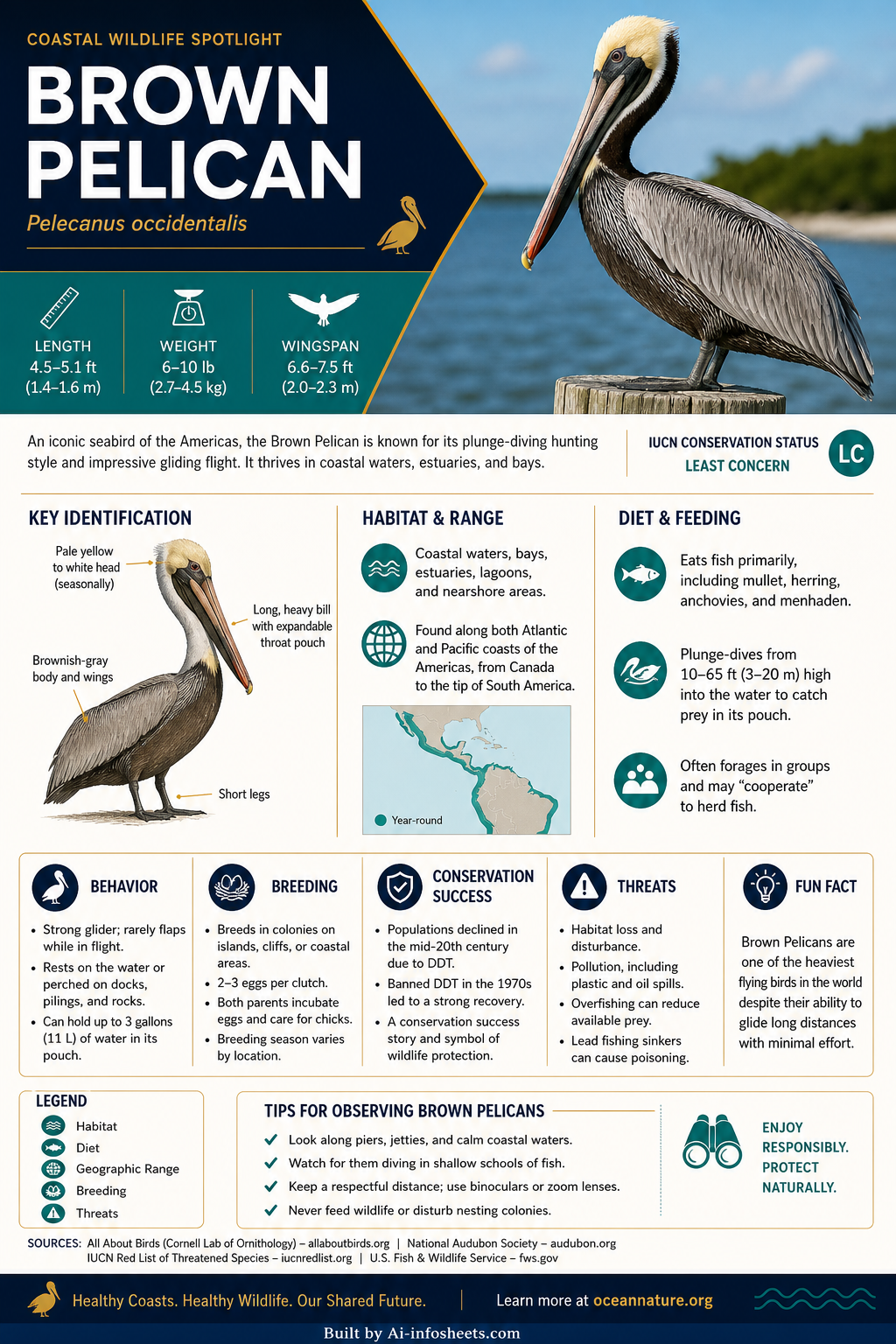
The Brown Pelican (Pelecanus occidentalis) stands as a prominent and beloved avian inhabitant of the Americas' coastlines. Instantly recognizable by its large size, distinctive throat pouch, and remarkable fishing dives, this species captivates birdwatchers and casual observers alike. Once severely threatened, its resurgence is a testament to dedicated conservation efforts and environmental stewardship. Understanding the Brown Pelican's biology, behavior, and ecological role provides insight into the health of our marine environments and highlights the importance of continued protection for this iconic seabird.
Physical Characteristics and Identification
Size and Appearance
The Brown Pelican is the smallest of the eight pelican species globally, yet it remains a substantial bird. Adults typically measure between 42 to 54 inches (107-137 cm) in length, boasting a wingspan that can reach an impressive 6.5 to 7.5 feet (2.0-2.3 meters) [0]. Their weight ranges from 6 to 12 pounds (2.7-5.4 kg). Distinctive brown plumage covers their body, contrasting with a white neck that often turns a rich reddish-brown at the nape during breeding season. Juveniles display a duller brown head and neck with a whitish belly.
Gular Pouch
The most striking feature of the Brown Pelican is its large, dilatable gular (throat) pouch, which can hold up to 3 gallons (11.4 liters) of water and fish [0]. This pouch is not used for storing food for long periods, but rather as a net to capture prey and then drain the water before swallowing. Its function is crucial to their unique feeding strategy, setting them apart from other seabirds.
Habitat and Distribution
Coastal Ecosystems
Brown Pelicans are strictly coastal birds, rarely venturing far inland or out of sight of land. Their preferred habitats include sandy beaches, estuaries, mangrove islands, piers, and offshore islets. These areas provide abundant food sources, safe nesting sites, and sheltered roosting locations. They are often seen perched on buoys, docks, or pilings, surveying their watery hunting grounds.
Range Across the Americas
Their distribution spans a vast range across the American continents. In North America, they breed along the Atlantic, Pacific, and Gulf coasts of the United States and Mexico. They are also found throughout the Caribbean and down the Pacific and Atlantic coasts of Central and South America, reaching as far south as northern Chile and the mouth of the Amazon River. Their migratory patterns often involve moving to warmer climates during colder months, though many populations are resident year-round.
Diet and Hunting Behavior
Primary Diet of Fish
The Brown Pelican's diet consists almost exclusively of fish, primarily non-commercial species. Preferred prey includes menhaden, herring, sardines, and anchovies. They are opportunistic feeders, however, and will consume any small to medium-sized fish that are abundant in their feeding grounds. An adult pelican can consume up to 4 pounds (1.8 kg) of fish per day [0].
Spectacular Plunge Diving
Their hunting technique is perhaps their most iconic behavior. Unlike other pelican species that fish while swimming, the Brown Pelican is a master of the plunge dive. From heights of up to 60 feet (18 meters), they dramatically fold their wings back and dive headfirst into the water, stunning fish with the impact and scooping them into their gular pouch. This impressive maneuver is often performed in groups, with multiple pelicans diving in synchronized fashion.
Reproduction and Life Cycle
Nesting and Breeding
Brown Pelicans typically breed in colonies on secluded islands or in dense mangrove forests, away from terrestrial predators. Nests are bulky structures made of sticks, reeds, or grasses, built on the ground or in low trees. Females lay clutches of 2 to 3 eggs, which both parents incubate for about a month. The young are altricial, born naked and helpless, relying entirely on their parents for food and warmth.
Chick Development
Pelican chicks are fed regurgitated fish by both parents. They grow rapidly, developing feathers and gaining strength over several weeks. Fledging occurs at around 9 to 12 weeks, though young pelicans often remain with the colony, learning essential survival skills from their parents and other adults. Brown Pelicans can live for over 30 years in the wild, with an average lifespan of about 15-25 years [0].
Conservation Status and Efforts
Historical Decline and Recovery
The 20th century saw a dramatic decline in Brown Pelican populations, primarily due to the widespread use of DDT and other organochlorine pesticides. These chemicals accumulated in the food chain, causing pelican eggshells to thin, leading to reproductive failure. Through the tireless efforts of conservationists and the ban of DDT in the United States in 1972, the species made a remarkable recovery. It was removed from the U.S. Endangered Species List in 2009 [0].
Ongoing Threats and Protections
Despite its successful recovery, the Brown Pelican still faces threats, including habitat loss, disturbance at nesting sites, entanglement in fishing gear, and oil spills. Continued monitoring, protection of critical habitats, and public education remain vital to ensure the long-term health of Brown Pelican populations. Protecting these magnificent birds contributes to the overall vitality of our coastal and marine ecosystems.
Protecting the Brown Pelican means safeguarding the health of our coasts. Support local conservation groups and be mindful of coastal habitats to ensure these incredible birds continue to thrive for generations to come. Your actions can make a difference in preserving our precious wildlife.