
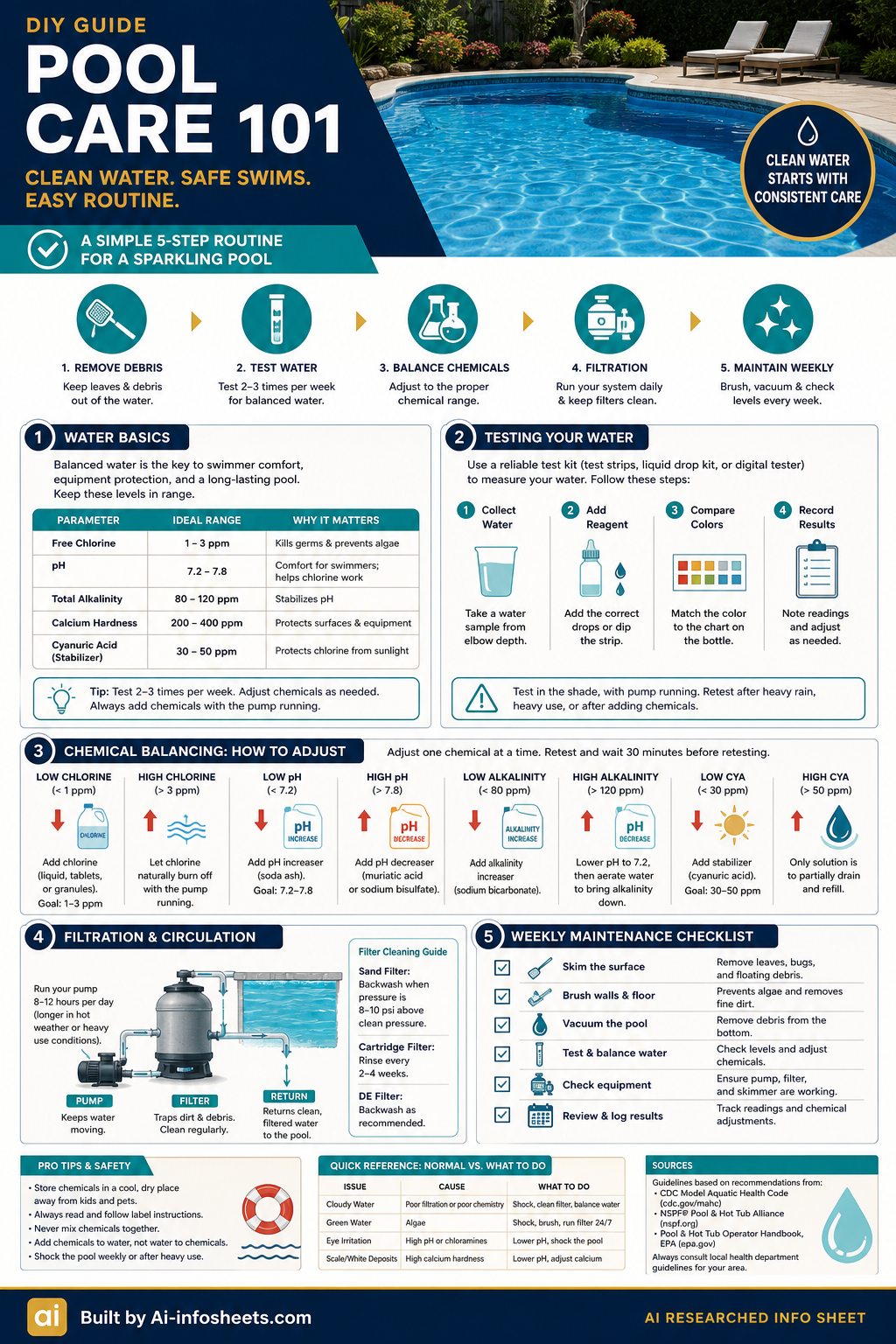
Maintaining a swimming pool can seem daunting, but with a clear understanding of basic principles and a consistent routine, anyone can achieve sparkling clean water and ensure safe swims. This DIY guide breaks down pool care into five simple steps, covering everything from routine debris removal to chemical balancing and filtration. Following these guidelines will not only keep your pool looking inviting but also protect your equipment and extend the life of your pool.
1. Remove Debris
Removing leaves, bugs, and other floating debris is the first and most immediate step in pool care. Regularly skimming the surface prevents organic matter from breaking down in the water, which can consume sanitizers and affect water chemistry. This simple daily task significantly contributes to overall water quality and reduces the workload on your filtration system. Using a skimmer net is quick and effective.
2. Test Water
Regular water testing is crucial for maintaining balanced pool chemistry. It's recommended to test your water 2-3 times per week to ensure levels are within optimal ranges. Balanced water is key for swimmer comfort, equipment protection, and the longevity of your pool. Test kits, whether strips, liquid drop kits, or digital testers, help you accurately measure key parameters. After collecting a water sample from elbow depth, add the correct reagents, compare colors to a chart, and record your results to determine necessary adjustments. Remember to test in the shade with the pump running, and retest after heavy rain, heavy use, or adding chemicals.
Free Chlorine
Free Chlorine should ideally be kept between 1-3 parts per million (ppm) (Source 1). This chemical is essential for killing germs and preventing algae growth, making it the primary sanitizer in your pool. If levels fall below 1 ppm, add chlorine in liquid, tablet, or granular form to reach the target range.
pH
The pH level indicates how acidic or basic your pool water is. The ideal range for pH is 7.2-7.8 (Source 1). Maintaining this range is vital for swimmer comfort and ensures that chlorine works effectively. If pH is below 7.2, it's too acidic; add a pH increaser (soda ash). If pH is above 7.8, it's too basic; add a pH decreaser (muriatic acid or sodium bisulfate).
Total Alkalinity
Total Alkalinity acts as a buffer, stabilizing your pH level. The ideal range is 80-120 ppm (Source 1). Proper alkalinity helps prevent rapid pH fluctuations. If alkalinity is low (below 80 ppm), add an alkalinity increaser (sodium bicarbonate). If high (above 120 ppm), lower the pH to 7.2, then aerate the water to bring alkalinity down.
Calcium Hardness
Calcium Hardness protects pool surfaces and equipment from corrosion or scaling. The recommended range is 200-400 ppm (Source 1). Low calcium can cause corrosion, while high calcium can lead to scale formation. Adjusting calcium hardness typically involves adding a calcium hardness increaser or partially draining and refilling the pool for very high levels.
Cyanuric Acid (Stabilizer)
Cyanuric Acid (CYA) stabilizes chlorine, protecting it from degradation by sunlight. The ideal range is 30-50 ppm (Source 1). If CYA is low (below 30 ppm), add a stabilizer. If it's too high (above 50 ppm), the only solution is to partially drain and refill the pool.
3. Balance Chemicals
Once you've tested your water, you'll need to adjust chemicals to bring all parameters into their proper ranges. Always adjust one chemical at a time and wait at least 30 minutes before retesting to see the effects. When adding chemicals, always add them to water, not water to chemicals, and ensure your pump is running to circulate them properly. Never mix different chemicals together, as this can create dangerous reactions. Store all chemicals in a cool, dry place away from children and pets.
4. Filtration & Circulation
Your pool's pump and filter system are its heart, continuously circulating and cleaning the water. Run your pump 8-12 hours per day, and even longer in hot weather or heavy use conditions. This ensures proper water movement and efficient filtration. Regularly clean your filter: backwash sand filters when pressure is 8-10 psi above clean pressure, rinse cartridge filters every 2-4 weeks, and backwash DE filters as recommended by the manufacturer. A well-maintained filter traps dirt and debris, returning clean, filtered water to your pool.
5. Maintain Weekly
Consistent weekly maintenance is key to a sparkling pool. This includes skimming the surface to remove floating debris, brushing walls and floors to prevent algae buildup and remove fine dirt, and vacuuming the pool bottom to remove settled debris. In addition to physical cleaning, continue to test and balance your water. Regularly check your equipment to ensure the pump, filter, and skimmer are all working correctly. Finally, track your readings and chemical adjustments; this log helps you understand your pool's needs and anticipate future adjustments.
By following these five steps consistently, you can maintain a beautiful, safe, and enjoyable swimming pool. Regular attention to debris removal, water chemistry, filtration, and general maintenance will ensure your pool is always ready for a refreshing dip. For specific issues like cloudy water, green water, eye irritation, or scale, refer to a quick reference guide or consult local pool professionals. Always prioritize safety by reading and following all chemical label instructions and shocking your pool weekly or after heavy use. Enjoy your clean water and safe swims!