
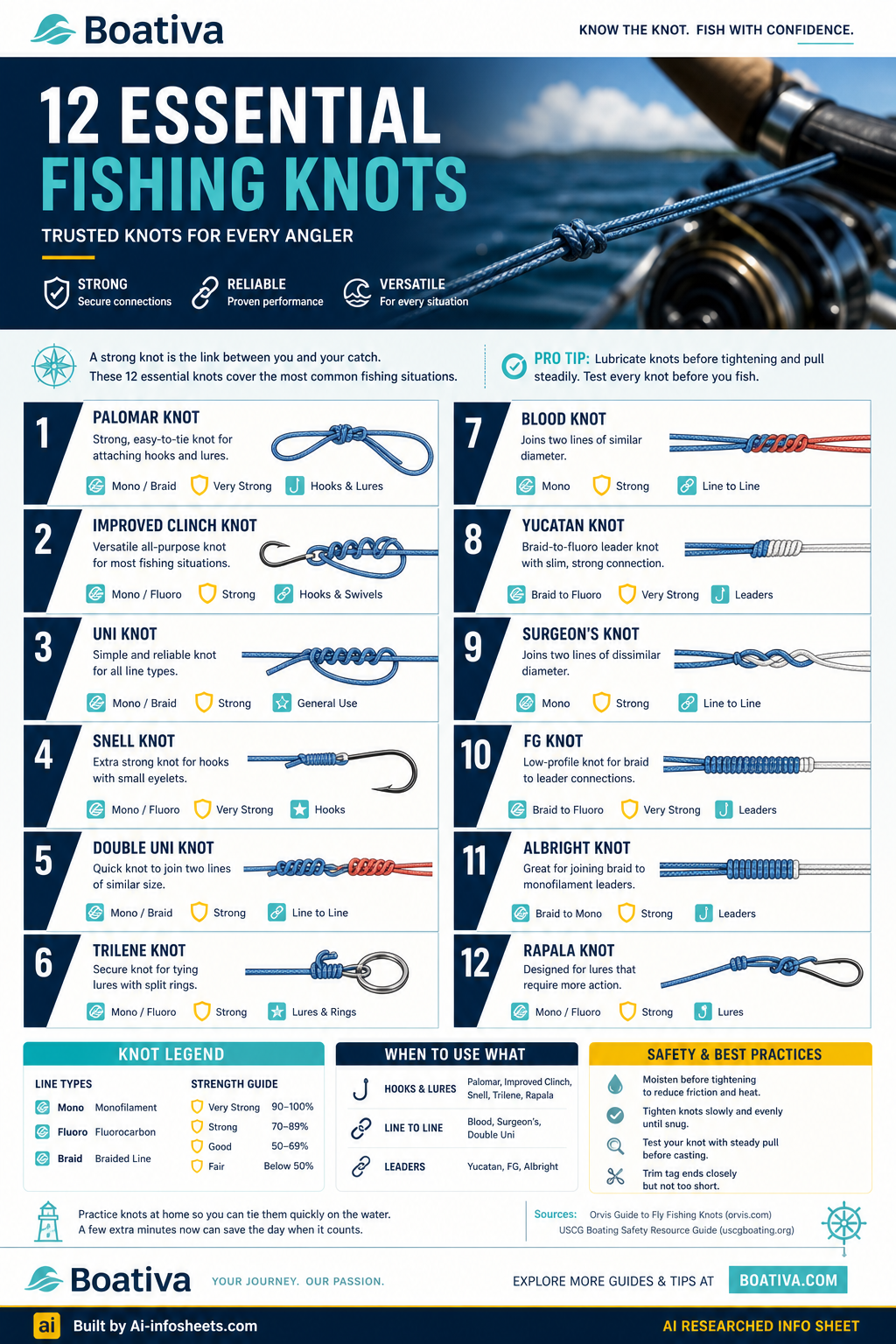
Fishing knots are the unsung heroes of every successful angling trip. A well-tied knot ensures secure connections between your line, hook, lure, and other rigging components, preventing break-offs and missed opportunities. While countless knots exist, mastering a select few can cover the vast majority of angling situations, providing confidence and improving your success rate on the water. This guide introduces six essential fishing knots every angler, from novice to expert, should know, detailing their applications and why they are so valuable.
The Fundamental Importance of Proper Knot Tying
Beyond simply holding components together, a properly tied fishing knot maintains the integrity of your fishing line, maximizing its breaking strength. A poorly tied knot can reduce a line's strength by as much as 50 percent (Source 0), leading to frustrating failures. Different knots are designed for specific purposes, such as attaching terminal tackle, joining two lines of similar or dissimilar diameters, or spooling line onto a reel. Understanding these applications is key to selecting the right knot for the job.
Palomar Knot
The Palomar knot is widely regarded as one of the strongest and most reliable knots for attaching terminal tackle, such as hooks, swivels, and lures. Its double-line configuration and straightforward tying process contribute to its exceptional strength, often retaining nearly 100 percent (Source 1) of the line's breaking strength. It is particularly effective with braided lines but also performs excellently with monofilament and fluorocarbon.
Uni Knot
The Uni knot is an incredibly versatile knot, prized for its ability to connect line to a reel, attach terminal tackle, or even join two lines. It's relatively easy to tie, cinches down securely, and offers consistent strength across various line types. Anglers often employ the Uni knot for its adaptability and its impressive strength retention, holding up to 90 percent (Source 2) of the line's breaking strength when tied correctly.
Improved Clinch Knot
The Improved Clinch knot is a staple for attaching fishing lines to hooks, lures, and swivels. It's a popular choice for monofilament and fluorocarbon lines due to its good strength and relative ease of tying, even in challenging conditions. While it may not retain as much strength on braided lines as the Palomar, it remains a go-to for many anglers, maintaining around 85 percent (Source 3) of the original line strength.
Surgeon's Knot
For quickly and reliably joining two lines of similar or even dissimilar diameters, the Surgeon's knot is an excellent choice. It's simple to tie, even with cold hands or in low light, and creates a strong, compact connection. This knot is particularly useful for adding a leader to a main line, with tests showing it can retain 90-95 percent (Source 4) of the weaker line's strength.
Blood Knot
The Blood knot is a classic and highly effective knot for joining two lines of similar diameter, especially monofilament. It creates a very strong and streamlined connection that passes smoothly through rod guides. While it can be more challenging to tie than the Surgeon's knot, its superior strength retention, often cited at 90-95 percent (Source 5) of the line's original strength, makes it a favorite among experienced anglers for permanent line connections.
Arbor Knot
When spooling new fishing line onto a reel, the Arbor knot is the perfect choice to secure the line to the reel's arbor (spool). It's designed to grip the smooth reel spool firmly, preventing the line from spinning freely. This simple, reliable knot ensures that the initial wraps of line stay in place, crucial for proper line lay and effective drag performance. It's not designed for breaking strength but purely for securing the line to the reel itself.
Mastering these six essential fishing knots will significantly enhance your angling confidence and effectiveness. Practice each knot until you can tie them quickly and correctly, ensuring strong, reliable connections every time you cast your line. A little time spent perfecting your knot-tying skills will pay dividends in landed fish and enjoyable days on the water. Happy fishing!