
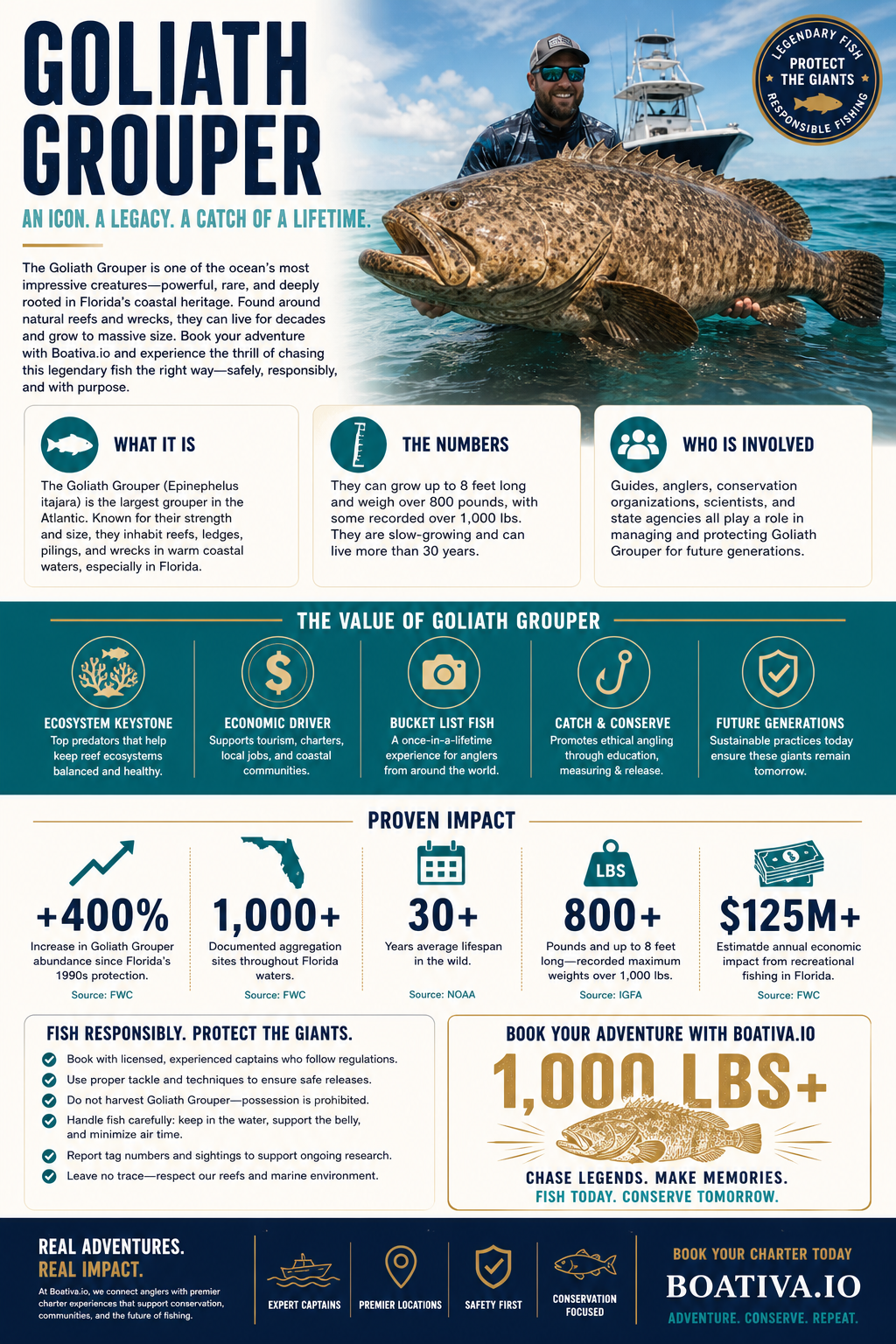


The Goliath Grouper, scientifically known as Epinephelus itajara, stands as one of the most iconic and imposing fish species found in the waters of the Atlantic Ocean. These magnificent marine giants are renowned for their incredible size, reaching weights of over 800 pounds and lengths of up to 8.2 feet. Found primarily in tropical and subtropical regions, from the coasts of Florida to Brazil and throughout the Caribbean, Goliath Grouper play a crucial role in maintaining the health and balance of their ecosystems. Despite their intimidating appearance, these fish are generally docile, but their sheer power makes them a thrilling target for respectful anglers. Their journey through severe overfishing to a remarkable recovery highlights the importance of sustained conservation efforts. Understanding these colossal fish—from their unique life cycle to their current protected status—is key to appreciating their ecological value and ensuring their continued presence in our oceans.
Identification and Characteristics
Goliath Groupers are readily identifiable by several distinctive features. Their massive size is perhaps the most striking characteristic, with adults capable of reaching lengths that dwarf human divers. They possess a robust, stocky body with a broad head and small eyes. Their coloration typically ranges from mottled brown to green or grayish hues, often adorned with irregular vertical bars, especially when young, which provide excellent camouflage against rocky bottoms and wrecks. A key identifying feature is their large, rounded pectoral fins and a uniquely shaped dorsal fin with 11 dorsal spines and 15-16 soft rays. Unlike many other grouper species that have a more pointed preopercle (gill cover), the Goliath Grouper's preopercle is broadly rounded and lacks prominent serrations. Their diet consists primarily of crustaceans, such as crabs and lobsters, as well as various fish, and even small sharks, which they ambush from hiding spots with a powerful suction feeding method.
Habitat and Distribution
The Goliath Grouper thrives in tropical and subtropical waters, preferring shallow coastal areas. Their primary habitat includes estuaries, mangrove systems, coral reefs, rocky outcroppings, shipwrecks, and artificial reefs. These structures provide both shelter from predators and abundant ambush points for hunting prey. Juveniles often seek refuge in brackish mangrove estuaries, benefiting from the nutrient-rich waters and protection from larger predators. As they mature, they move to deeper coastal waters. Their geographical range spans the western Atlantic, from Florida, the Gulf of Mexico, and the Caribbean Sea down to Brazil. They are also found in the eastern Atlantic along the coast of West Africa, though this population is thought to be somewhat distinct. Their reliance on specific benthic structures makes them vulnerable to habitat degradation and loss, reinforcing the need for responsible coastal management and protection of these critical environments.
Conservation Status and Efforts
The Goliath Grouper's journey has been one of significant concern, evolving from a once abundant species to a critically endangered one, and now, showing signs of recovery thanks to robust conservation initiatives. Throughout the 1970s and 1980s, overfishing decimated their populations, leading to a complete fishing ban in US federal and state waters in 1990. This protective measure, alongside habitat preservation efforts, has allowed the species to rebound, gradually increasing their numbers. They are currently listed as 'Vulnerable' by the IUCN Red List. Research efforts continue to monitor their populations, understand their reproductive cycles, and assess the impacts of environmental changes. These conservation successes underscore the importance of science-based management and public awareness in safeguarding vulnerable marine species. Future management decisions will balance the needs of the species with the interests of various stakeholders.
Ethical Fishing and Charters
While Goliath Grouper fishing is strictly regulated, with a protected catch-and-release season currently in effect in Florida, experiencing these magnificent fish on a charter remains an unforgettable adventure. Boativa.io connects you with experienced charter captains who specialize in ethical catch-and-release Goliath Grouper fishing. These charters are designed to provide a thrilling encounter while prioritizing the well-being of the fish. Captains use heavy tackle to minimize fight time, ensure proper handling techniques for quick release, and adhere to all regulatory guidelines. Participating in a guided charter not only offers the chance to battle one of the ocean's most powerful fish but also supports sustainable tourism and educates anglers on responsible fishing practices. It’s an unparalleled opportunity to witness these underwater giants up close and contribute to their ongoing conservation through respectful engagement.
Embark on an extraordinary journey to encounter the majestic Goliath Grouper. Explore the unique opportunity to engage with these aquatic giants responsibly through a Boativa.io fishing charter. Discover available trips and book your adventure today to experience the thrill of catch-and-release fishing while contributing to marine conservation.