
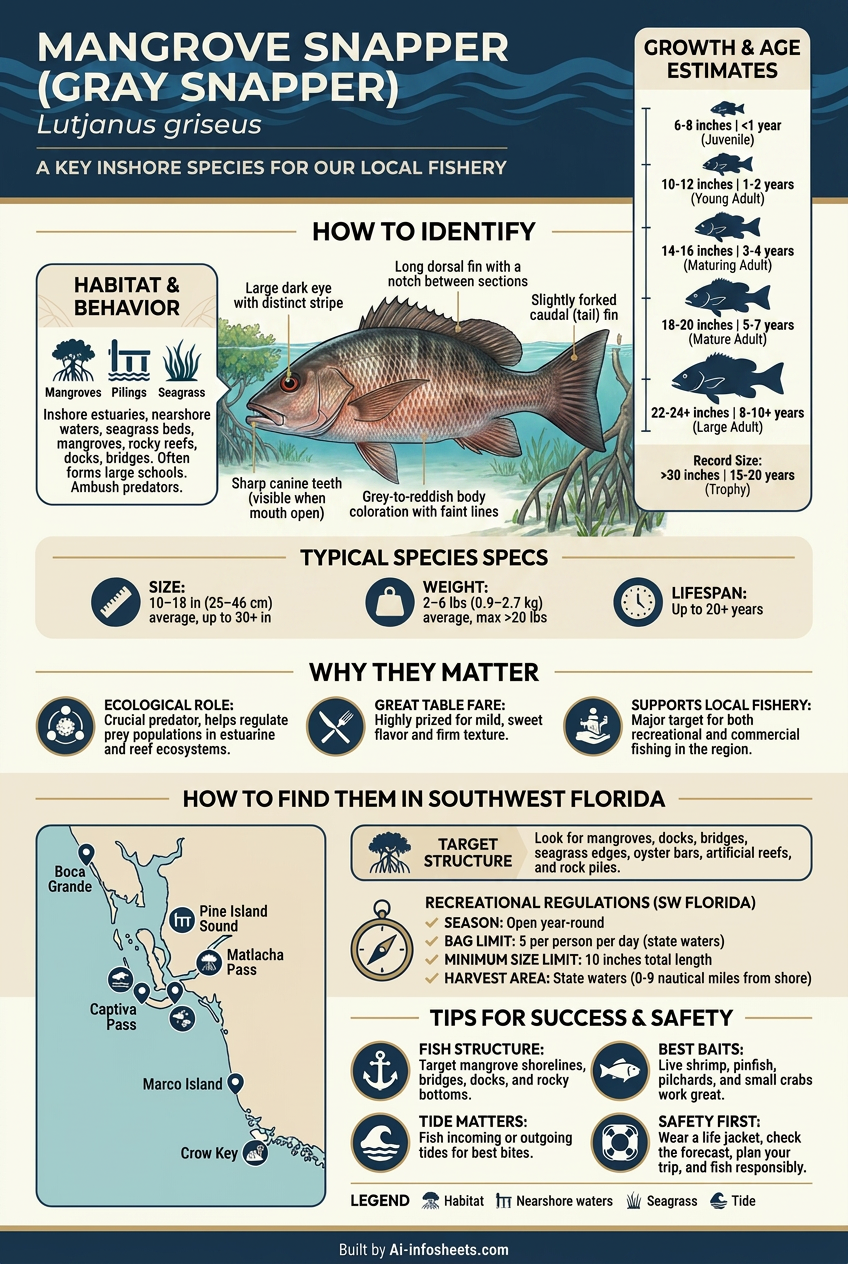


The mangrove snapper, Lutjanus griseus, is a highly sought-after species by anglers across its range. Known for its challenging fight and delicious white flesh, this fish is a staple of inshore and nearshore fisheries. Understanding its biology, preferred habitats, and behaviors is key to successful and sustainable fishing. This guide provides an overview of identification, habitat, and effective techniques for targeting mangrove snapper.
Identification and Characteristics
Mangrove snapper, also commonly known as gray snapper or 'mango', are characterized by their olive-green to reddish-brown backs fading to a coppery or silvery belly. A distinctive dark stripe often runs from the snout across the eye, particularly in juveniles. They have moderately large scales and pointed anal and dorsal fins. Their teeth are prominent, with several enlarged canines in the front of both jaws, well-adapted for their predatory lifestyle. Adults can reach up to 89 centimeters (35 inches) in length and weigh over [9 kilograms (20 pounds)](@ref:0). The average recreational catch, however, is typically much smaller, often ranging from 25 to 50 centimeters (10 to 20 inches). While generally drab in coloration, they can exhibit a reddish hue, especially when found in deeper, rocky areas.
Habitat and Distribution
Mangrove snapper are highly adaptable and found in tropical and subtropical waters of the western Atlantic Ocean, from Massachusetts to Brazil, including the Gulf of Mexico and the Caribbean Sea. They are especially abundant in Florida and throughout the Gulf Coast. As their name suggests, they are strongly associated with mangrove prop roots during their juvenile stages, using these intricate systems for protection from predators and as a rich feeding ground. As they mature, they migrate to a wider variety of structured habitats. These include oyster reefs, seagrass beds, rocky outcrops, jetties, pilings, and artificial reefs. They can be found in a wide range of salinities, from brackish estuarine waters to offshore reefs at depths of up to 180 meters (600 feet).
Diet and Feeding Behavior
Mangrove snapper are opportunistic predators with a varied diet that changes with age and habitat. Juveniles primarily feed on small crustaceans like shrimp and crabs, as well as juvenile fish. As they grow larger, their diet expands to include a wider array of fish, such as sardines and mullet, squid, and larger crustaceans. They are ambush predators, often hiding within structure and darting out to strike unsuspecting prey. They are most active feeders during low light conditions, particularly at dawn and dusk, and often feed more aggressively in areas with strong current.
Effective Fishing Techniques
Targeting mangrove snapper requires understanding their cautious nature and their preference for structure. A stealthy approach, light tackle, and natural baits are often most effective. Using 10-20 lb (4.5-9 kg) braided line with a fluorocarbon leader of 20-30 lb (9-13.6 kg) is a common setup to ensure a sensitive feel and reduce visibility. When fishing near mangroves or other heavy cover, slightly heavier leader might be necessary to prevent break-offs.
Live Bait Fishing
Live bait is arguably the most effective method for tempting mangrove snapper. Small live shrimp, pilchards, pinfish, or mojarras are excellent choices. Hooking the bait lightly, such as through the nose or tail, allows it to swim naturally. A small, strong hook (e.g., a 1/0 to 3/0 circle hook) is recommended to minimize gut hooking and ensure a solid hookset. Using a small split shot or no weight at all in areas with light current allows the bait to drift naturally into the snapper's hiding spots.
Cut Bait Fishing
Cut bait, such as pieces of fresh mullet, squid, or pilchard, can also be highly effective, especially when fished on the bottom or drift-fished. Presenting a small piece of cut bait on a appropriately sized hook, often a 1/0 to 2/0 circle hook, with a small egg sinker above a swivel is a common rig. The key is to use fresh, smelly bait and to ensure it’s presented naturally to avoid spooking wary snapper. Sometimes, chumming with small pieces of cut bait can attract snapper to your area and get them into a feeding frenzy.
Artificial Lures
While live and cut bait are generally more productive, artificial lures can catch mangrove snapper, particularly if they are actively feeding or you are targeting larger individuals. Small jigs tipped with soft plastics that mimic shrimp or baitfish, as well as small spoons or lipped crankbaits, can be effective. Working these lures slowly and close to structure is crucial. Early morning or late evening often yield the best results with artificial lures, as snapper are more aggressive during these times.
Successfully fishing for mangrove snapper combines knowledge of their behavior, choice of appropriate tackle, and strategic bait presentation. By employing these techniques, anglers can enjoy the thrill of catching this challenging and delicious species, while also contributing to sustainable fishing practices. Remember to always check local regulations for bag limits and size restrictions to ensure responsible angling. Good luck on your next snapper adventure!