
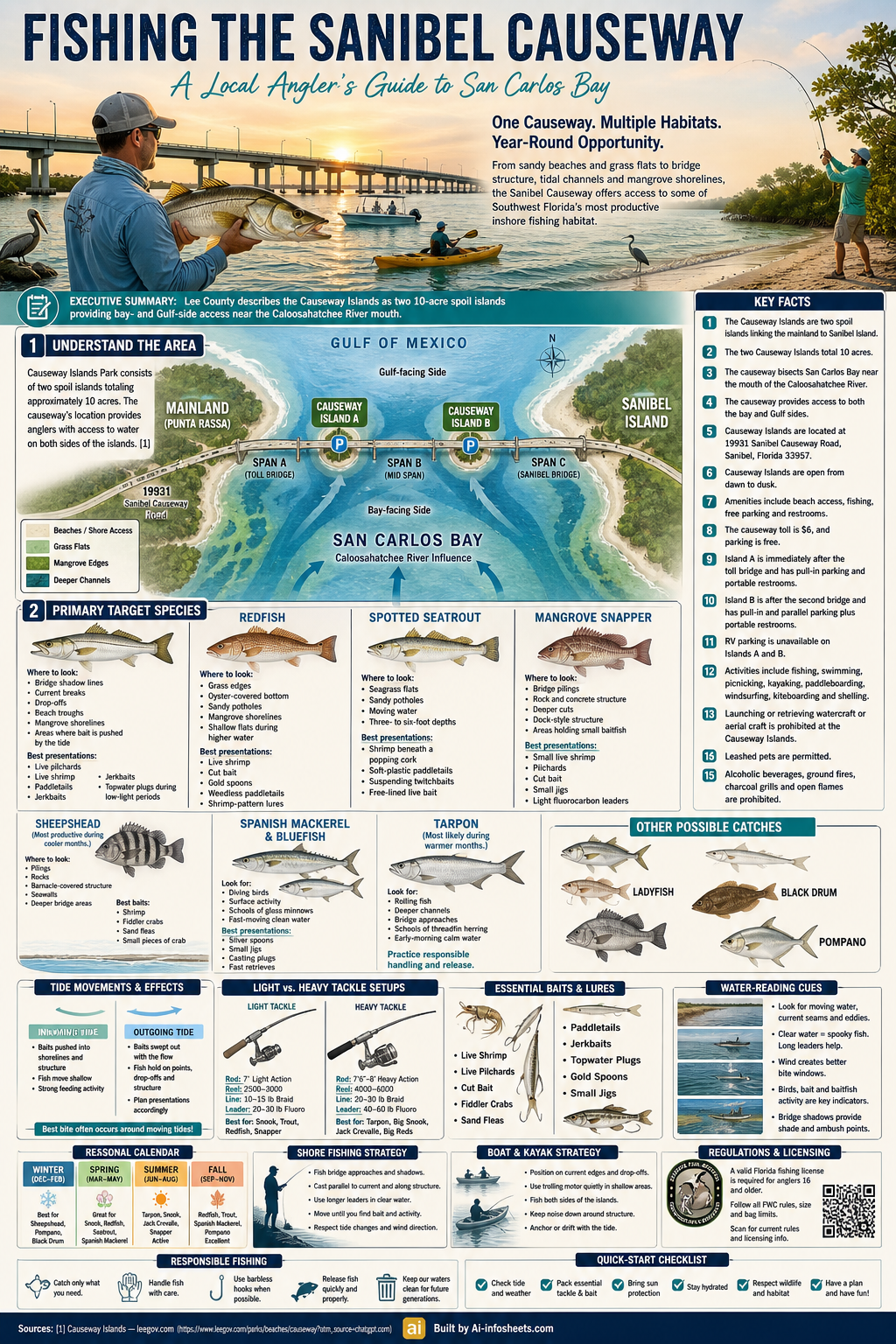
The Sanibel Causeway, a vital link between mainland Southwest Florida and Sanibel Island, offers anglers a unique and productive fishing experience. Spanning across San Carlos Bay near the mouth of the Caloosahatchee River, the causeway's two spoil islands, totaling approximately 10 acres, provide access to both calm bay-facing and dynamic Gulf-facing waters. This guide, crafted for residents, visitors, and seasoned anglers alike, delves into the diverse habitats, primary target species, and strategic approaches that make the Sanibel Causeway a premier fishing destination year-round. From sandy beaches and grass flats to bridge structure and mangrove shorelines, understanding this dynamic ecosystem is key to a successful outing.
Understand the Sanibel Causeway Fishing Area
The Sanibel Causeway Islands Park consists of two distinct spoil islands, each offering unique fishing opportunities. Causeway Island A and Causeway Island B provide access to varied aquatic environments. The causeway's strategic location means anglers can access productive waters on both sides of these islands: the calmer San Carlos Bay side and the more exposed Gulf-facing side. The influence of the Caloosahatchee River adds a freshwater component, especially after heavy rains, impacting salinity and fish distribution. Anglers can find diverse structures, including bridge spans, expansive beaches, shallow grass flats, deeper channels, and intricate mangrove edges. This variety creates a rich tapestry of habitats, supporting a wide array of inshore species. Understanding these distinct zones and their characteristics is the first step toward a productive fishing trip.
Primary Target Species
The Sanibel Causeway teems with diverse fish species. Successful angling often means targeting specific species with tailored approaches.
Snook
Snook are highly sought after in Southwest Florida. Look for them around bridge shadow lines, current breaks, drop-offs, beach troughs, and mangrove shorelines. Areas where bait is pushed by the tide are particularly productive. Best presentations include live pilchards or shrimp, paddletails, jerkbaits, and topwater plugs during low-light periods.
Redfish
Redfish are common in the shallower areas. Focus on grass edges, oyster-covered bottom, sandy potholes, and mangrove shorelines, especially during higher water. Effective baits and lures include live shrimp, cut bait, gold spoons, weedless paddletails, and shrimp-pattern lures.
Spotted Seatrout
Spotted Seatrout favor seagrass flats and sandy potholes. Target them in moving water, typically at three- to six-foot depths. Shrimp beneath a popping cork, soft-plastic paddletails, suspending twitchbaits, and free-lined live bait are all excellent choices.
Mangrove Snapper
Mangrove snapper are often found near structure. Search for them around bridge pilings, rock and concrete structure, deeper cuts, and areas holding small baitfish. Small live shrimp, pilchards, cut bait, and small jigs on light fluorocarbon leaders are effective.
Sheepshead
Sheepshead are most productive during cooler months. They congregate around pilings, rocks, barnacle-covered structure, seawalls, and deeper bridge areas. Use shrimp, fiddler crabs, sand fleas, or small pieces of crab as bait.
Spanish Mackerel and Bluefish
These aggressive, fast-moving fish often indicate their presence through surface activity. Look for diving birds, schools of glass minnows, and fast-moving clean water. Silver spoons, small jigs, casting plugs, and fast retrieves are ideal for Spanish mackerel and bluefish.
Tarpon
Tarpon are most likely encountered during warmer months. Look for rolling fish in deeper channels, bridge approaches, and around schools of threadfin herring, particularly in early-morning calm water. Responsible handling and release are crucial for these majestic fish.
How the Tide Changes the Fishing
Tides play a critical role in fishing success at the Sanibel Causeway. Understanding the movement of water often determines where fish feed and where bait congregates.
Incoming Tide Strategy
During an incoming tide, water pushes across grass flats, drawing fish closer to mangroves and shallow feeding areas. Cleaner Gulf water enters the bay, and bait moves along shorelines and points. This is an excellent time to target species like redfish and snook as they feed in newly flooded areas.
Outgoing Tide Strategy
An outgoing tide creates strong drainage areas, narrow cuts, creek mouths, and current breaks around the bridge. Bait is swept into deeper water, often concentrating game fish in ambush points. Concentrate on drop-offs and bridge structures where current creates feeding lanes. The key is to fish where moving water carries bait past an ambush point, rather than simply casting where the water looks promising. Extremely strong currents may necessitate heavier weights, while weaker currents might call for lighter leaders and more natural bait presentations.
Shore-Fishing Strategy
Shore fishing at the Sanibel Causeway is highly accessible and rewarding. To maximize your chances, plan your trip carefully. Arrive near sunrise or during the final two hours before sunset, as these low-light periods are often the most productive. Begin by observing the water for visible bait, diving birds, subtle current seams, or nervous water indicating feeding activity. Cast parallel to the beach to intercept fish moving along the shoreline before attempting longer offshore casts. Methodically work points, drop-offs, and areas where current wraps around the islands. Fan-casting an area before moving allows you to cover more water effectively. Always keep live bait in clean, oxygenated water for optimal presentation, and use circle hooks when fishing with natural bait to promote healthy releases. Move quietly and avoid wading directly through productive areas to prevent spooking fish. For safety, always wear protective footwear, shuffle your feet while wading to avoid stingrays, and be alert for boat traffic, lightning, strong currents, and sharp shells. Never stand in active navigation areas, and diligently keep hooks, line, and trash away from birds and other wildlife.
Boat and Kayak Strategy
Boaters and kayakers have expanded access to the diverse habitats surrounding the Sanibel Causeway. Focus your efforts on bridge-current seams, channel edges, and grass-flat drop-offs where fish often congregate. Explore wind-protected shorelines, mangrove points, and areas where bait schools are visible away from crowded beaches. Responsible boating is paramount to both safety and environmental conservation. Avoid anchoring in navigation channels or blocking bridge openings. Always give shore anglers adequate casting room and operate slowly around paddlers and swimmers. Protect valuable seagrass beds by trimming your motor up or poling through shallow water. Never chase feeding fish through areas with swimmers or crowded beaches, ensuring a respectful coexistence with other water users.
Recommended Tackle
Having the right tackle is crucial for success at the Sanibel Causeway. Here are three versatile setups:
Light Inshore Setup
Ideal for smaller species, this setup includes a 7-foot medium-light spinning rod paired with a 2500–3000-size reel. Spool it with 10-pound braided line and use a 15–20-pound fluorocarbon leader. This is best for trout, ladyfish, pompano, and smaller snapper.
General-Purpose Setup
This versatile setup covers most inshore species. Opt for a 7- to 7½-foot medium spinning rod with a 3000–4000-size reel. Load it with 15-pound braided line and a 20–30-pound fluorocarbon leader. Perfect for snook, redfish, trout, and jacks.
Bridge and Heavy-Structure Setup
For larger fish or those near abrasive structure, a medium-heavy spinning rod with a 4000–5000-size reel is best. Use 20–30-pound braided line and a 30–50-pound leader, adjusting as conditions require. This is the go-to for larger snook, tarpon, sharks, and fighting fish close to structure. Remember to adjust leader size based on water clarity, potential abrasion, and the specific target species.
Essential Baits and Lures
A well-stocked tackle box will prepare you for various angling situations at the Sanibel Causeway.
Natural Baits
Live shrimp, pilchards, threadfin herring, and pinfish are consistently effective. For cut bait, consider mullet or ladyfish. Additionally, fiddler crabs and sand fleas can be highly productive for certain species like sheepshead and pompano.
Artificial Lures
Anglers should carry a selection of artificials, including three- to four-inch paddletails, various shrimp imitations, and topwater plugs for active fish. Suspending twitchbaits are excellent for enticing strikes from wary fish, while gold spoons and silver spoons are reliable for redfish and mackerel, respectively. Small bucktail jigs and other casting jigs round out a versatile artificial selection. Always match the size of your lure to the baitfish currently present in the area to maximize your chances of success.
Seasonal Fishing Calendar
The Sanibel Causeway offers fishing opportunities throughout the year, with various species peaking at different times.
Winter Opportunities
During the cooler winter months, primary opportunities include sheepshead, black drum, trout, redfish, and mangrove snapper. These species tolerate or prefer the cooler water temperatures.
Spring Opportunities
Spring brings warmer temperatures and a broader range of targets. Snook become more active, Spanish mackerel return, and trout and redfish remain strong. Tarpon also begin to appear, signaling the start of their migratory season.
Summer Opportunities
Summer is prime time for snook, tarpon, mangrove snapper, and various shark species. Jack crevalle are also abundant. Early mornings are recommended due to the heat and prevalence of afternoon thunderstorms.
Fall Opportunities
Fall offers a fantastic transition period as cooling waters bring migratory bait. Redfish and snook remain strong targets, while Spanish mackerel, trout, and jack crevalle are also readily available. This season often provides some of the most consistent action.
Reading the Water
Mastering the art of "reading the water" is fundamental to successful fishing at the Sanibel Causeway. Look for key visual indicators that reveal where fish might be holding or feeding. A current seam indicates a transition zone where faster and slower moving water meet, often concentrating bait and predatory fish. Sandy potholes within grass flats provide ambush points for species like redfish and trout. The grass edge where seagrass meets sandy bottom is a classic feeding territory. A drop-off marks a change in depth, creating a natural highway for fish movement. A bridge's shadow line offers cover and ambush opportunities for snook and other predators. Bait showers, where small fish jump frantically, clearly indicate active predators below. Diving birds are a reliable sign of schooling baitfish being pushed to the surface. Nervous water – subtle ripples or disturbances on an otherwise calm surface – can reveal the presence of schooling bait or feeding fish. Mangrove points and windward shorelines (where wind pushes water and bait) are also prime areas. Remember, finding bait and moving water is usually more important than repeatedly casting at an empty location.
Regulations and Licensing
Navigating Florida's saltwater fishing regulations is essential for responsible angling. Regulations can change by species, season, and management region. It is critical for anglers to verify current rules immediately before fishing using authoritative sources like the Florida Fish and Wildlife Conservation Commission (FWC) or the Fish Rules app. FWC specifically recommends using the app with location services enabled for site-specific regulations.
Florida residents fishing from shore are generally required to possess a saltwater shoreline license, unless exempt or covered by another qualifying license. While this resident shoreline license is available at no cost, ordering convenience fees may apply. It is important to note that this specific license does not cover fishing from a vessel or from shoreline accessed by a vessel. Additionally, a snook permit is required to retain snook, in addition to the applicable fishing license. Never rely on an old printed regulation card. Always confirm seasons, slot limits, bag limits, and special permits before deciding to keep any fish. Regulations shown in any guide may become outdated. Verify current FWC rules before harvesting fish.
Responsible Fishing
Practicing responsible fishing ensures the health of fish populations and the enjoyment of all. Always use appropriate tackle that is suited to your target species to shorten fight times, minimizing stress on the fish. When handling fish for release, wet your hands thoroughly to protect their protective slime coat. Support larger fish horizontally to prevent organ damage, and never hold fish solely by the jaw without supporting their body. Keep fish in the water as much as possible, especially while preparing for a quick photo, to reduce air exposure. Use circle hooks with natural bait, as they are designed to hook fish in the mouth, leading to fewer gut-hooked fish. Carry a dehooker and line cutters to facilitate quick releases and manage tangled lines. If catching qualifying deep-water reef fish, properly vent or descend them as required by FWC regulations to aid in their survival. Always collect and properly dispose of all fishing line, hooks, and bait containers; never leave trash behind. Give marine wildlife such as dolphins, manatees, birds, and sea turtles plenty of space, and never feed dolphins or allow them to take released fish, as this can alter their natural behaviors and health.
Find the Bait. Fish the Current. Respect the Resource. With this guide, you're now equipped to enjoy the exceptional fishing opportunities at the Sanibel Causeway while ensuring the longevity of this precious ecosystem for generations to come. Visit the FWC website or use the Fish Rules app for the most current regulations before your trip.