
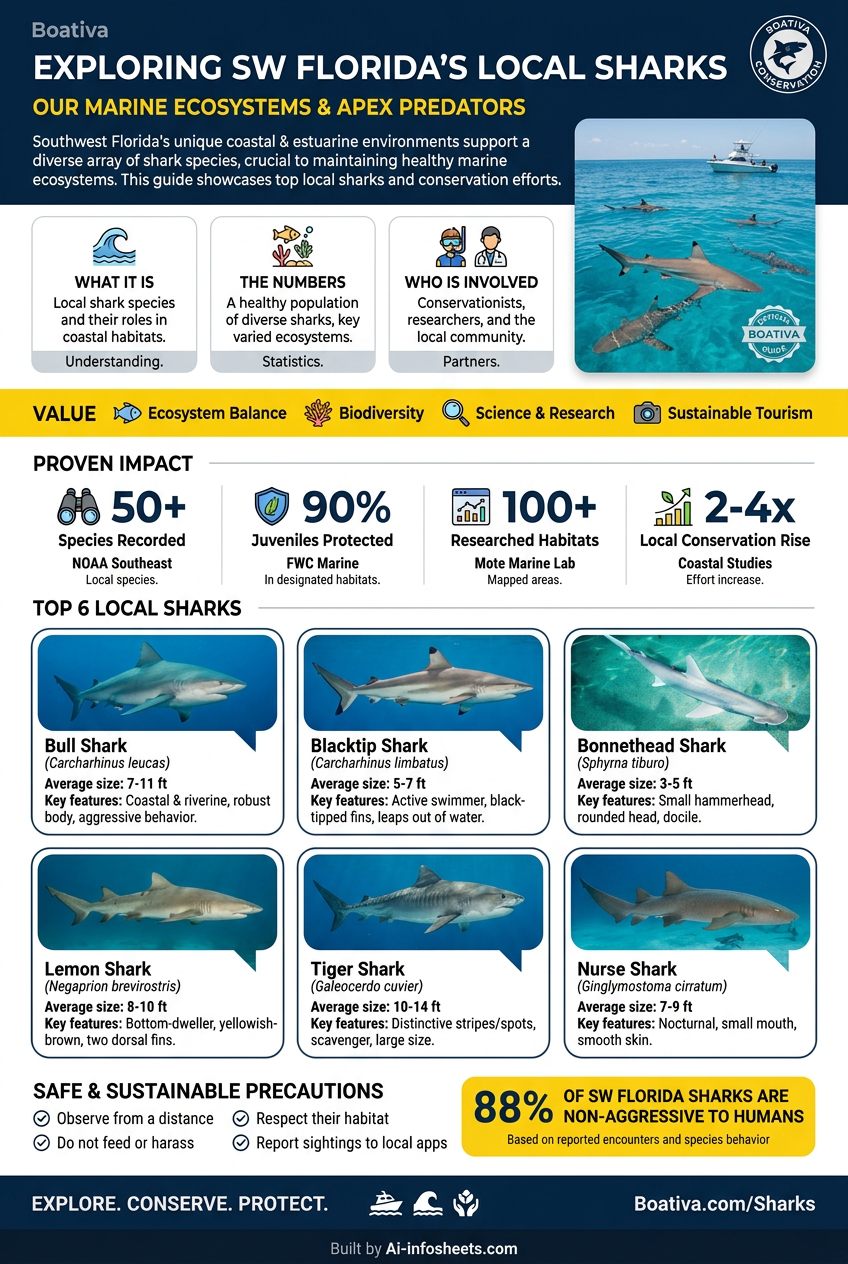


Southwest Florida's vibrant coastal waters, encompassing estuaries, bays, and the Gulf of Mexico, are teeming with marine life, including a fascinating array of shark species. These powerful predators play an indispensable role in maintaining the health and balance of marine ecosystems. Understanding the types of sharks that inhabit these waters, along with their behaviors and ecological significance, is crucial for both conservation efforts and ensuring safe interactions for humans. This guide delves into the top 6 most commonly encountered shark species in Southwest Florida, providing essential identification tips, insights into their habitats, and important safety advice for anyone enjoying our beautiful coastline.
Understanding Southwest Florida's Shark Population
Florida's extensive coastline, particularly the warm, nutrient-rich waters of the southwest, provides an ideal habitat for numerous shark species. These areas serve as crucial breeding grounds, nurseries, and feeding territories. Sharks are vital apex predators, helping to control fish populations and remove sick or weak animals, thereby ensuring the overall health of the marine environment. While encounters are rare, knowing which species frequent the area and how to behave respectfully in their habitat is key to responsible exploration of our oceans.
1. Bull Shark (Carcharhinus leucas)
Bull sharks are robust, aggressive sharks known for their ability to thrive in both saltwater and freshwater environments. They are commonly found in shallow coastal waters, rivers, and estuaries throughout Southwest Florida. Distinguished by their short, blunt snout, they can grow to over 11 feet long and weigh up to 500 pounds. Their diet primarily consists of bony fish, other sharks, rays, and even marine mammals. Due to their preference for shallow, murky waters often frequented by humans, they are considered one of the more potentially dangerous species.
2. Blacktip Shark (Carcharhinus limbatus)
Blacktip sharks are easily recognizable by the distinct black tips on most of their fins. These active, fast-swimming sharks are frequently observed in Florida's coastal waters, often leaping out of the water while feeding. They typically reach lengths of 5 to 6 feet and feed on a variety of small to medium-sized bony fish, rays, and crustaceans. Blacktips are common in nearshore environments and are often involved in baitfish migrations, making them a common sight for beachgoers, particularly during spring and fall.
3. Great Hammerhead (Sphyrna mokarran)
Although less common than some other species, the Great Hammerhead is a truly iconic presence in Southwest Florida's offshore and nearshore waters. Recognized by its distinctive, broad, T-shaped head, this species can grow to impressive sizes, often exceeding 13 feet in length. Great Hammerheads are powerful predators, primarily preying on stingrays, other sharks, and various fish. Their unique head shape is believed to enhance sensory perception, aiding in their hunting strategies.
4. Nurse Shark (Ginglymostoma cirratum)
Nurse sharks are docile, bottom-dwelling sharks frequently found in shallow, warm waters such as coral reefs, seagrass beds, and mangrove channels across Southwest Florida. They have a distinctive, flattened head, small mouth, and two prominent barbels near their nostrils, which they use to scan for food. Growing up to 10 feet long, they are largely nocturnal, feeding on crustaceans, mollusks, and small fish. Nurse sharks are generally harmless unless provoked, making them popular for divers and snorkelers to observe from a respectful distance.
5. Lemon Shark (Negaprion brevirostris)
Lemon sharks are typically found in shallow, subtropical waters, including estuaries, bays, and around mangrove islands in Southwest Florida. They get their name from their yellowish-brown coloration, which provides excellent camouflage against sandy seafloors. These sharks typically grow to about 8 to 10 feet long and primarily consume bony fish, rays, and crustaceans. Lemon sharks are known to be social and are often observed in small groups, particularly in nursery areas where young sharks develop.
6. Tiger Shark (Galeocerdo cuvier)
The Tiger Shark is one of the largest predatory sharks, easily identified by the distinctive vertical stripes on its sides, which fade with age. These powerful sharks inhabit tropical and subtropical waters worldwide, including the offshore and sometimes nearshore areas of Southwest Florida. They possess a remarkably broad diet, consuming fish, seals, birds, sea turtles, and even other sharks, hence their nickname "oceanic scavenger." Tiger sharks can grow to more than 18 feet and are considered highly migratory, traversing vast oceanic distances.
Coexisting Safely with Sharks
While shark encounters are rare, it's always wise to exercise caution and respect when sharing the ocean. Avoid swimming at dawn, dusk, or night when sharks are most active. Steer clear of areas with heavy fishing activity or where baitfish are schooling. If you spot a shark, remain calm, move slowly and deliberately out of the water, and never harass or feed them. By understanding these magnificent creatures and adhering to safety guidelines, we can ensure a harmonious relationship with Southwest Florida's marine inhabitants.