
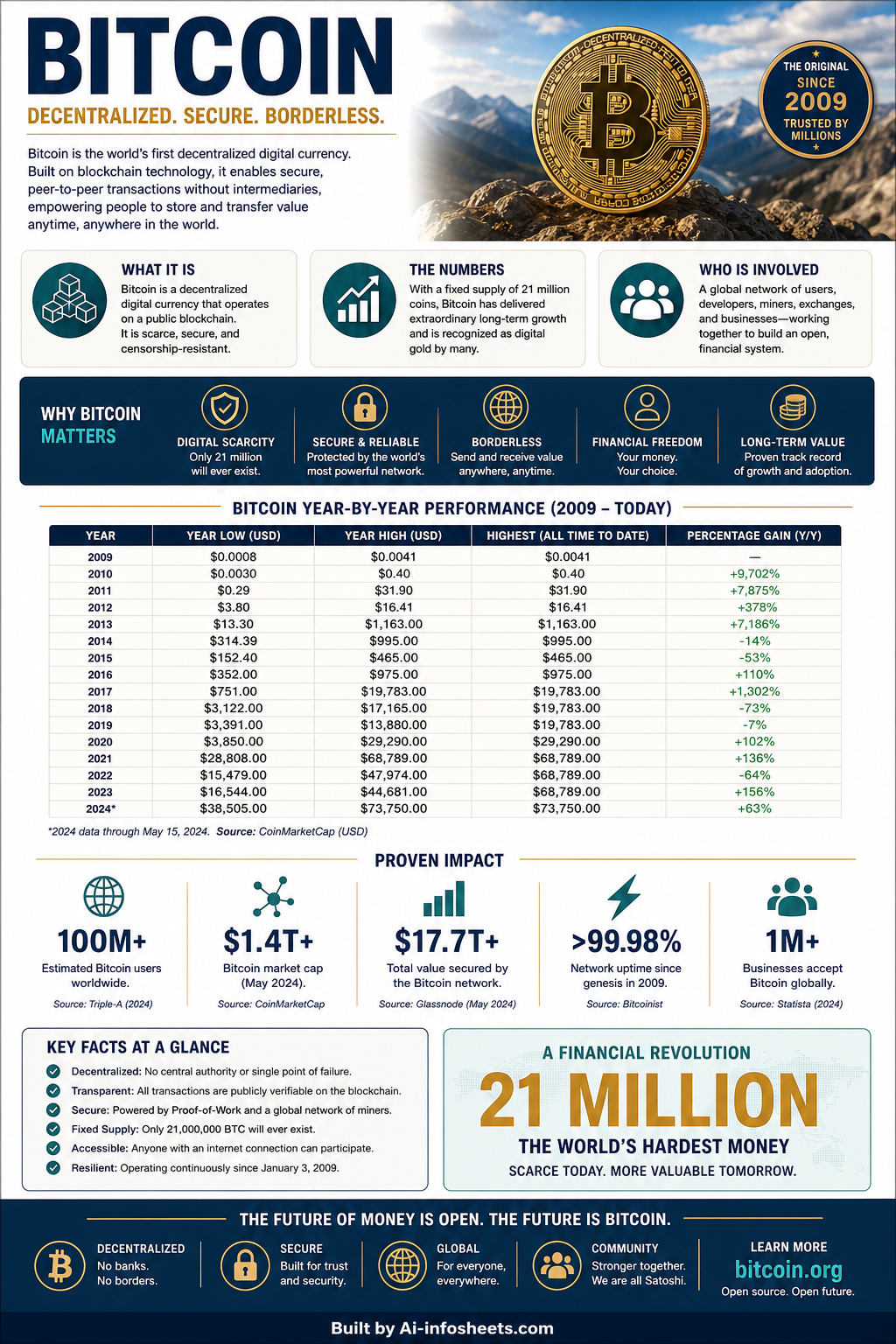


Bitcoin, often hailed as the pioneer of digital currencies, emerged as a groundbreaking innovation that has profoundly reshaped the landscape of global finance. Conceived as a decentralized electronic cash system, Bitcoin was designed to operate without the need for a central authority or financial institution. Its creation introduced the world to blockchain technology, an immutable and transparent ledger that underpins its security and functionality. This revolutionary concept has captivated investors, technologists, and economists alike, sparking a new era of digital assets. Understanding Bitcoin involves delving into its technical underpinnings, economic principles, and its potential to democratize financial systems. The following sections will demystify the core components of Bitcoin, providing a comprehensive overview for anyone interested in this leading cryptocurrency.
The Genesis of Bitcoin and Satoshi Nakamoto
Bitcoin was introduced to the world in 2008 through a whitepaper titled "Bitcoin: A Peer-to-Peer Electronic Cash System," authored by an anonymous entity known as Satoshi Nakamoto. The first block on the Bitcoin blockchain, often called the “genesis block,” was mined on January 3, 2009. To this day, the true identity of Satoshi Nakamoto remains unknown, adding an element of mystery to Bitcoin's origin. This anonymity underscores one of Bitcoin's core tenets: decentralization, where no single individual or entity controls the network.
How Blockchain Technology Powers Bitcoin
At the heart of Bitcoin's functionality is blockchain technology. A blockchain is a distributed public ledger that records all Bitcoin transactions in chronological order. Each "block" in the chain contains a timestamp and a link to the previous block, creating an unbreakable chain of records. Once a transaction is added to a block and the block is added to the blockchain, it becomes extremely difficult to alter, ensuring the integrity and security of the network. This transparent and secure system eliminates the need for intermediaries like banks to verify transactions.
Bitcoin Mining: Securing the Network
Bitcoin mining is the process by which new bitcoins are introduced into circulation and transactions are verified and added to the blockchain. Miners use powerful computers to solve complex computational puzzles. The first miner to solve the puzzle gets to add the next block of transactions to the blockchain and is rewarded with newly minted bitcoins, plus transaction fees. This process, known as Proof-of-Work, is energy-intensive but crucial for maintaining the network's security and preventing fraudulent transactions. The Bitcoin network's power consumption is a topic of ongoing discussion, with estimates indicating it can be comparable to that of entire countries.
Decentralization and Supply Cap
One of Bitcoin's defining features is its decentralized nature. Unlike traditional fiat currencies issued by central banks, Bitcoin is not controlled by any government or financial institution. Instead, it is maintained by a network of users and miners across the globe. This decentralization makes it censorship-resistant and prevents single points of failure. Furthermore, Bitcoin has a fixed supply cap: only 21 million bitcoins will ever be created. This scarcity is designed to protect its value from inflation over time, contrasting sharply with the potentially unlimited supply of fiat currencies.
Bitcoin's Economic Impact and Future Potential
Since its inception, Bitcoin has evolved from a niche digital experiment into a global asset with significant market capitalization. Its price volatility often draws headlines, but its underlying technology continues to inspire innovation in fintech. Bitcoin is increasingly being adopted by merchants and accepted by institutional investors, broadening its utility and legitimacy. While its future remains subject to regulatory developments and technological advancements, Bitcoin's role in pioneering a new era of digital and decentralized finance is undeniable. Its potential to offer financial inclusions to the unbanked and provide an alternative to traditional banking systems continues to drive its prominence.
Bitcoin represents more than just a digital currency; it is a testament to the power of decentralized technology to challenge conventional systems. Whether you're considering an investment, exploring its technological marvel, or simply curious about its impact, understanding these fundamental principles is key. Continued research and education are essential as this revolutionary technology evolves. Explore further to stay informed on the latest developments in cryptocurrency and blockchain.