
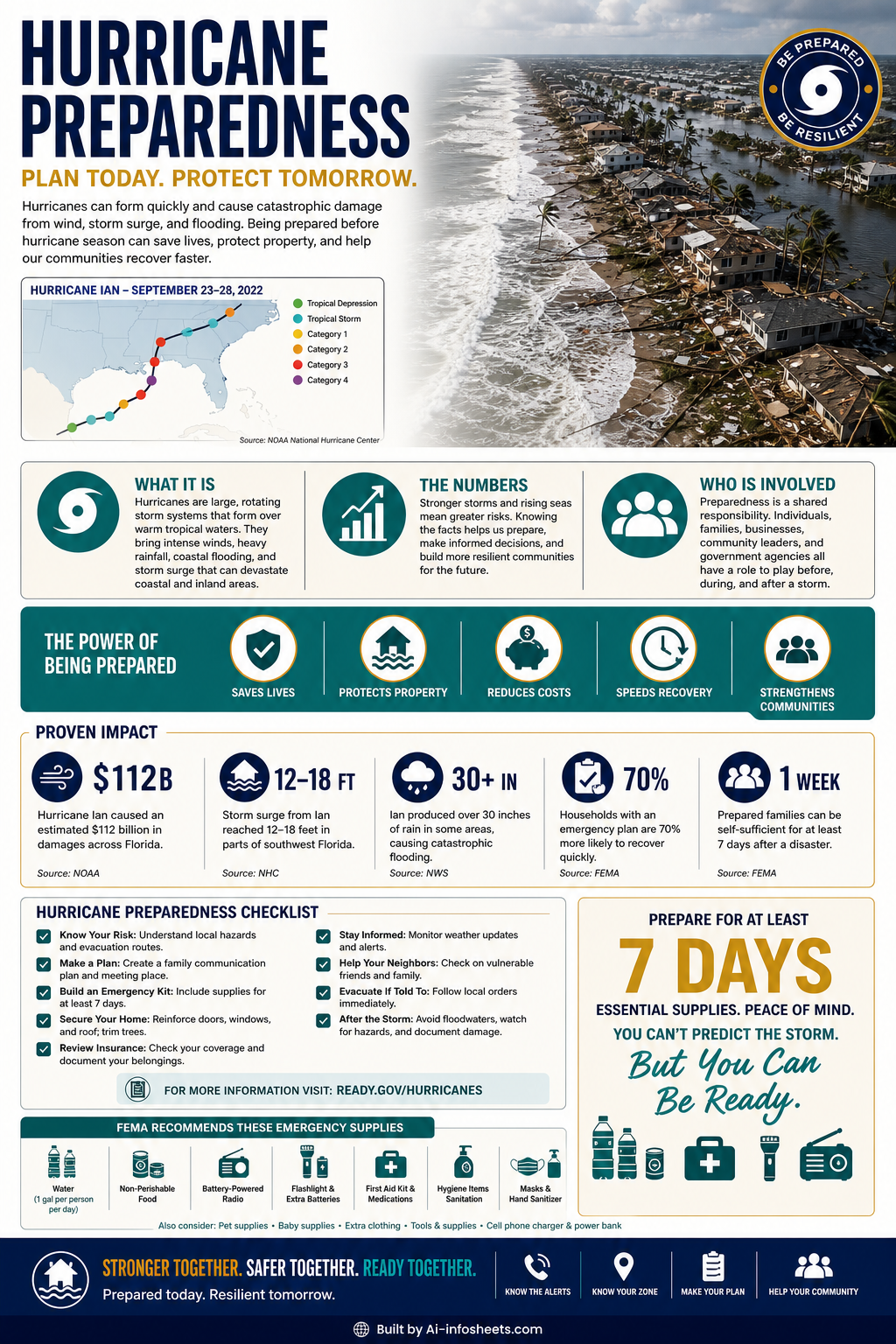


Florida, with its extensive coastline, is highly susceptible to hurricanes and tropical storms, making preparedness an annual necessity for its residents. The Atlantic hurricane season officially runs from June 1st to November 30th each year, though storms can occur outside this period. Developing a proactive plan not only helps protect your family and property but also provides peace of mind when a storm threatens. This guide outlines six essential steps for Florida residents to ensure they are adequately prepared before, during, and after a hurricane event.
Build a Comprehensive Emergency Kit
Having a well-stocked emergency kit is foundational to hurricane preparedness. This kit should contain enough supplies to sustain each member of your household for at least "72 hours" (entities.stats.0.value entities.stats.0.unit). Essential items include non-perishable food, bottled water ("1 gallon" entities.stats.1.value entities.stats.1.unit) per person per day, a battery-powered radio, flashlights, extra batteries, a first-aid kit, whistle, local maps, and personal hygiene items. Don't forget any necessary medications for family members or pet supplies. Keep this kit in an easily accessible location.
Develop and Practice an Evacuation Plan
Knowing your evacuation route and destination in advance is critical. Florida's Division of Emergency Management encourages residents to understand their local evacuation zones and to heed official evacuation orders. Plan multiple routes to your designated safe location, which could be a friend's or relative's home outside the evacuation zone, or a public shelter. Discuss and practice the plan with all household members, ensuring everyone knows how to communicate if separated.
Secure Your Home and Property
Before a hurricane strikes, take steps to protect your home. This includes trimming trees and shrubs, clearing gutters and drains, and securing loose outdoor items like patio furniture and garbage cans. Consider installing hurricane shutters or boarding up windows with plywood. If evacuating, turn off propane tanks and consider turning off utilities if advised by local authorities. These measures can significantly reduce potential damage from high winds and flooding.
Create a Family Communication Plan
A solid communication plan ensures all family members know how to contact each other during and after a storm. This plan should include out-of-state contacts as cell phone service may be disrupted locally. Designate an emergency meeting place both inside and outside your neighborhood. Write down important phone numbers, including those of emergency services, family, and insurance providers, as electronic devices may not be reliable.
Safeguard Important Documents
Gather vital documents such as identification, insurance policies, medical records, and financial information. Place them in a waterproof, portable container that you can easily take with you if you need to evacuate. Consider digitizing copies of these documents and storing them on a secure cloud service. Having these accessible will be crucial for recovery efforts, insurance claims, and proving identity after a storm.
Stay Informed and Heed Official Guidance
During hurricane season, continuously monitor official weather alerts and advisories from reliable sources like the National Hurricane Center and local emergency management agencies. Have multiple ways to receive alerts, such as NOAA weather radio, local news, and smartphone apps. Follow instructions from local officials regarding evacuation orders, shelter locations, and post-storm safety. Your adherence to these directives can be life-saving.
Preparing for a hurricane may seem daunting, but by taking these six proactive steps, Florida residents can significantly enhance their safety and resilience. Review your plans annually and update your emergency kit to ensure you are always ready for whatever the hurricane season brings. Being prepared contributes to a safer community for everyone.