
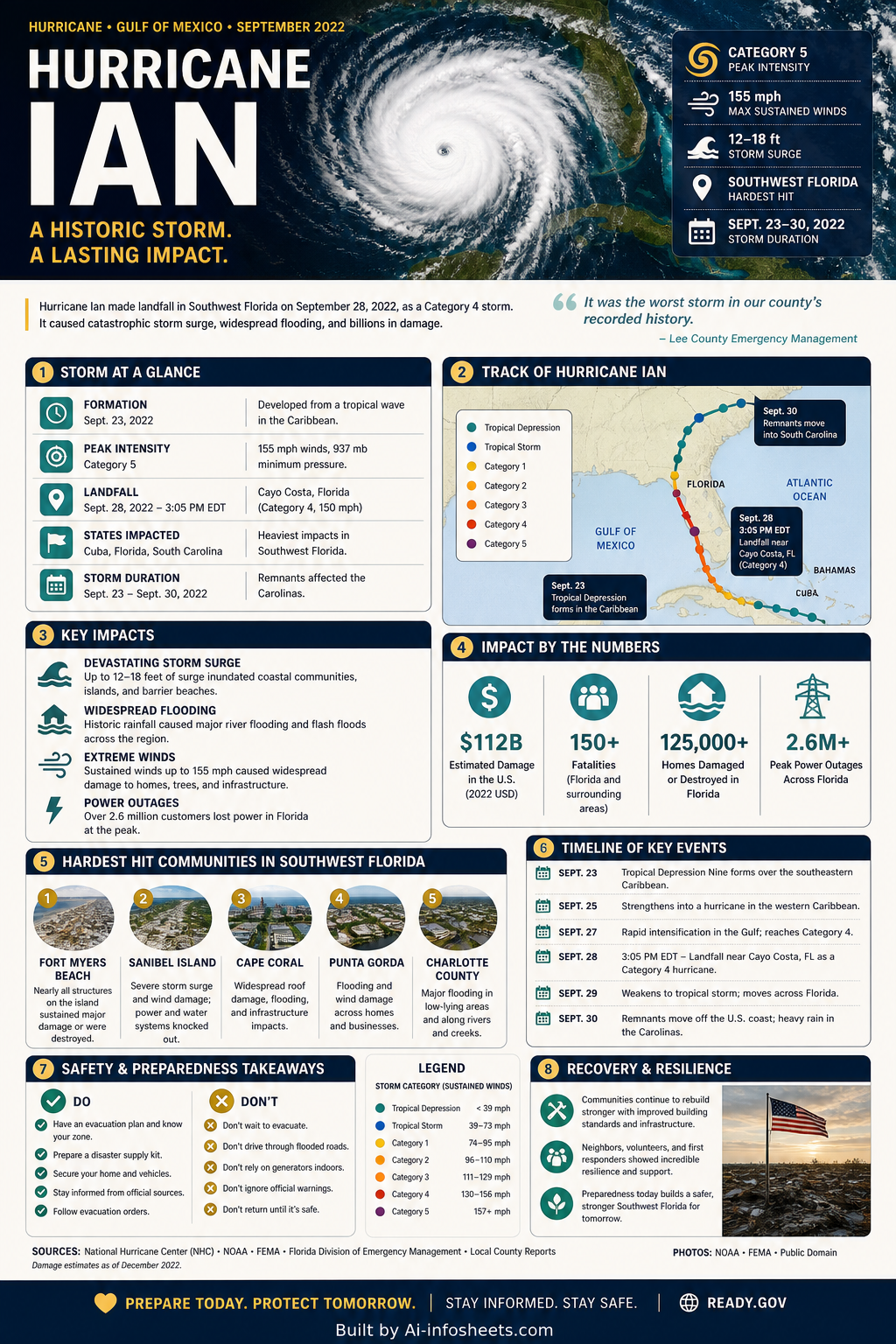


Hurricane Ian made landfall in Southwest Florida on September 28, 2022, as a powerful Category 4 storm, bringing catastrophic storm surge, extreme winds, and torrential rainfall. The hurricane caused widespread devastation, particularly in coastal communities such as Fort Myers Beach, Sanibel Island, and parts of Charlotte County. Its impact transcended immediate destruction, leading to significant long-term challenges related to economic recovery, environmental restoration, and community rebuilding. Understanding the scope of this event is crucial for future disaster mitigation and preparedness strategies.
The Path and Power of Hurricane Ian
Hurricane Ian rapidly intensified over the warm waters of the Caribbean and Gulf of Mexico before striking Florida's Gulf Coast. It initially made landfall near Cayo Costa, Florida, with maximum sustained winds estimated at 155 miles per hour, just shy of Category 5 status on the Saffir-Simpson Hurricane Wind Scale. The storm's slow forward motion exacerbated its destructive potential, allowing prolonged exposure to its intense eyewall. The National Hurricane Center (NHC) reported that Hurricane Ian became the deadliest hurricane to strike Florida since the 1935 Labor Day hurricane.
Catastrophic Storm Surge
One of the most destructive aspects of Hurricane Ian was its unprecedented storm surge. Coastal areas experienced water levels that, in some places, exceeded 15 feet above ground level, inundating homes, businesses, and infrastructure. This surge was particularly devastating in Fort Myers Beach, where it wiped out entire neighborhoods and swept structures off their foundations. The extraordinary force of the water reshaped barrier islands and significantly altered shorelines, contributing to extensive erosion and environmental damage that will take years to remediate. The scale of the surge led to a substantial loss of life and property.
Widespread Wind Damage and Flooding
Beyond storm surge, Hurricane Ian unleashed destructive winds across a broad swath of Florida. These high winds tore roofs off buildings, toppled trees, and downed power lines, leading to widespread power outages impacting over 2.6 million customers at its peak. The storm also produced immense rainfall, with some areas receiving more than 20 inches of precipitation. This led to significant inland flooding, compounding the damage in communities far from the immediate coastline and overwhelming drainage systems. The combination of wind, water, and flooding presented a complex and multifaceted challenge for emergency responders.
Economic and Social Impacts
The economic toll of Hurricane Ian was immense, with preliminary estimates placing insured losses in Florida alone between $40 billion and $70 billion, making it one of the costliest hurricanes in U.S. history. Beyond financial costs, the hurricane caused severe social disruption. Thousands of homes were destroyed or rendered uninhabitable, displacing countless residents. The storm also impacted critical infrastructure, including roads, bridges, and utilities, hindering recovery efforts. Mental health impacts, such as trauma and stress, became prevalent in affected communities, highlighting the long-term human cost of such disasters.
Recovery Efforts and Lessons Learned
In the aftermath of Hurricane Ian, a massive, coordinated recovery effort was launched by federal, state, and local agencies, alongside non-profit organizations and volunteers. The Federal Emergency Management Agency (FEMA) provided billions in aid for housing, infrastructure repair, and other essential services. Despite these efforts, the recovery process is anticipated to take many years due to the scale of destruction. Hurricane Ian underscored critical lessons in hurricane preparedness, including the importance of robust building codes, effective evacuation planning, and resilient infrastructure development. Moving forward, a focus on climate change adaptation and community-based resilience strategies will be paramount for mitigating the impact of future extreme weather events.
Hurricane Ian serves as a stark reminder of the increasing intensity and destructive potential of tropical storms. While recovery is ongoing, the resilience of Floridians and the coordinated efforts of numerous agencies offer hope. Continued support for affected communities and proactive investment in disaster preparedness are essential to safeguard lives and livelihoods against future natural hazards.