
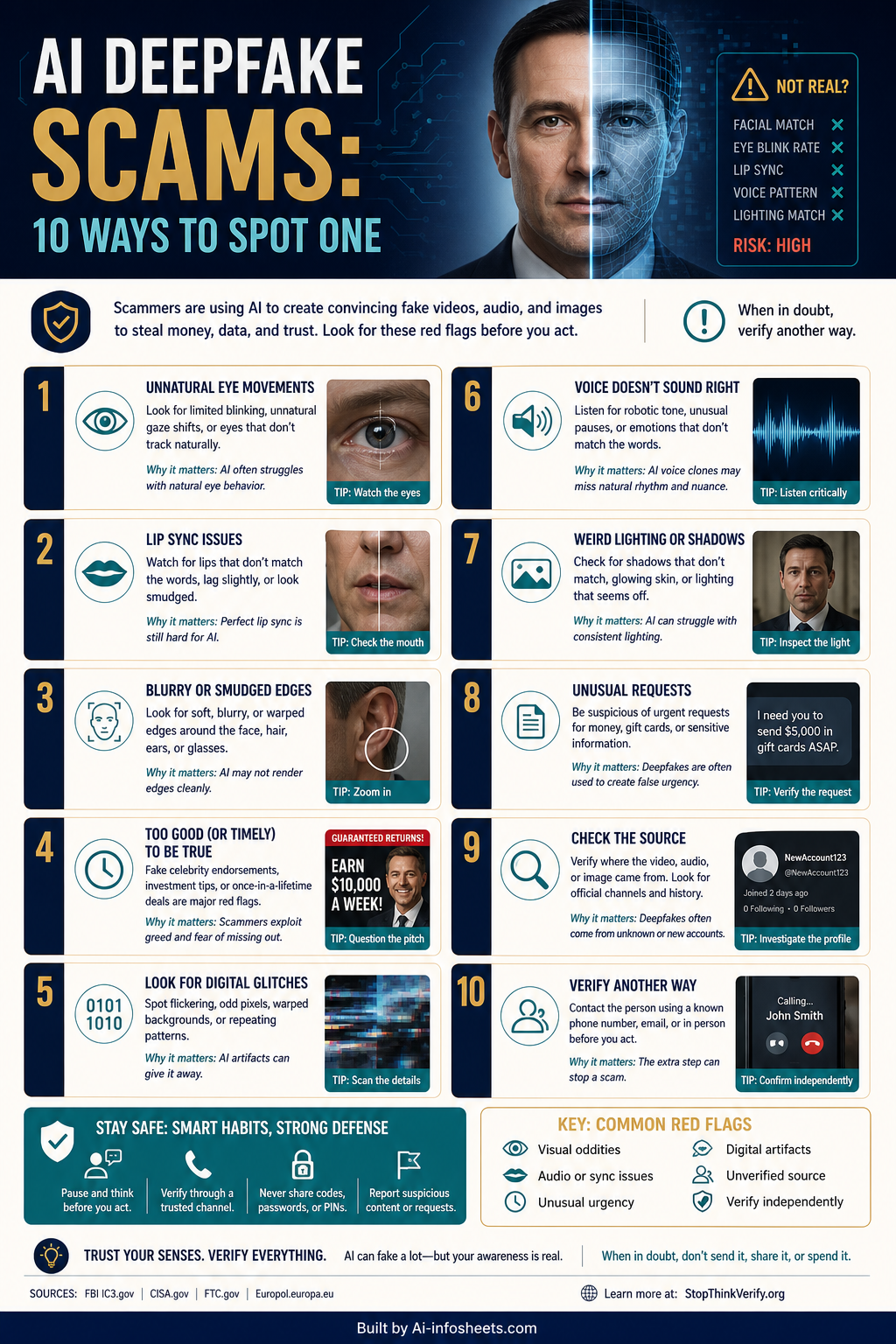


The rise of artificial intelligence has brought about incredible advancements, but also new challenges, particularly in the realm of digital deception. AI deepfake technology, which creates synthetic media that can mimic real individuals with persuasive accuracy, is increasingly being used in sophisticated scams. These deepfakes can range from fake audio recordings and video calls to manipulate individuals, to entirely fabricated online personas used for financial fraud or spreading misinformation. Protecting yourself in this evolving digital landscape requires a keen eye and an understanding of the tell-tale signs of a deepfake. This guide outlines 10 key identifiers to help you recognize and avoid falling victim to these advanced AI-driven scams.
1. Unnatural Eye Movement and Blinking Patterns
Deepfake subjects often exhibit inconsistent or unnatural eye movements. This can manifest as a lack of focus, unusual gaze directions, or an absence of blinking altogether. Real humans blink every 2 to 10 seconds, and deepfakes frequently fail to replicate this natural behavior, making it a noticeable red flag.
2. Inconsistent Lighting and Shadows
Pay close attention to how light illuminates the subject's face and surrounding environment. Deepfakes often struggle to maintain consistent lighting and shadow effects, resulting in areas that appear artificially lit or shadows that don't align with the supposed light source. This can create an eerie, mismatched visual.
3. Pixelation, Blurring, or Artifacts Around the Edges
Generative AI models, while advanced, can still leave subtle digital fingerprints. Look for areas of pixelation, blurring, or odd artifacts around the edges of the subject's face, hair, or hands. These inconsistencies often arise from the merging of different image components.
4. Distorted or Robotic Audio
Audio deepfakes, or the audio track within a video deepfake, might sound robotic, muffled, or have an unnatural cadence. Listen for odd pauses, changes in pitch that don't match typical speech patterns, or a lack of emotional fluctuation in the voice. Voice cloning technology is improving, but imperfections can still be detected.
5. Mismatched Lip Sync and Facial Movements
One of the most common deepfake tells is poor synchronization between the audio and the visual representation of speech. Lips may not perfectly match the spoken words, or facial expressions may appear stiff, exaggerated, or fail to convey appropriate emotion. A delay or misalignment can indicate tampering.
6. Unnatural Skin Texture and Appearance
Deepfakes might present skin that looks too smooth, too textured, or oddly colored. The AI might struggle to replicate natural pores, wrinkles, and blemishes, leading to an artificially flawless or conversely, an overly uniform appearance that doesn't quite look real.
7. Lack of Emotion or Inappropriate Expressions
While deepfakes can generate expressions, they often lack the nuance and spontaneity of human emotion. The subject might display a limited range of emotions, or their expressions could seem out of place for the context of the conversation, indicating a fabricated portrayal.
8. Inconsistent Background Elements or Changes
The AI might focus heavily on the subject, leading to imperfections in the background. Look for strange distortions, flickering objects, or elements in the background that mysteriously appear or disappear. These inconsistencies can reveal where the AI has struggled to maintain coherence.
9. Odd Head Position or Body Posture
Deepfakes sometimes exhibit unnatural head movements or body postures that feel stiff, static, or disproportionate. The head might be strangely angled or remain too still, and the body may not move fluidly or naturally in sync with the head or speech.
10. Low-Resolution or Grainy Video Quality
To mask imperfections, creators of deepfakes might deliberately present their content in a lower resolution or with a grainy filter. While not a definitive sign on its own, combined with other indicators, poor video quality can be a tactic to obscure the more apparent signs of manipulation.
By staying vigilant and knowing these common deepfake identifiers, you can significantly reduce your risk of falling victim to sophisticated AI-driven scams. Always verify information from unfamiliar sources and exercise caution when interacting with digital content that triggers any of these red flags. Your awareness is your best defense in the age of AI. Stay informed, question what you see and hear, and protect your digital footprint.