
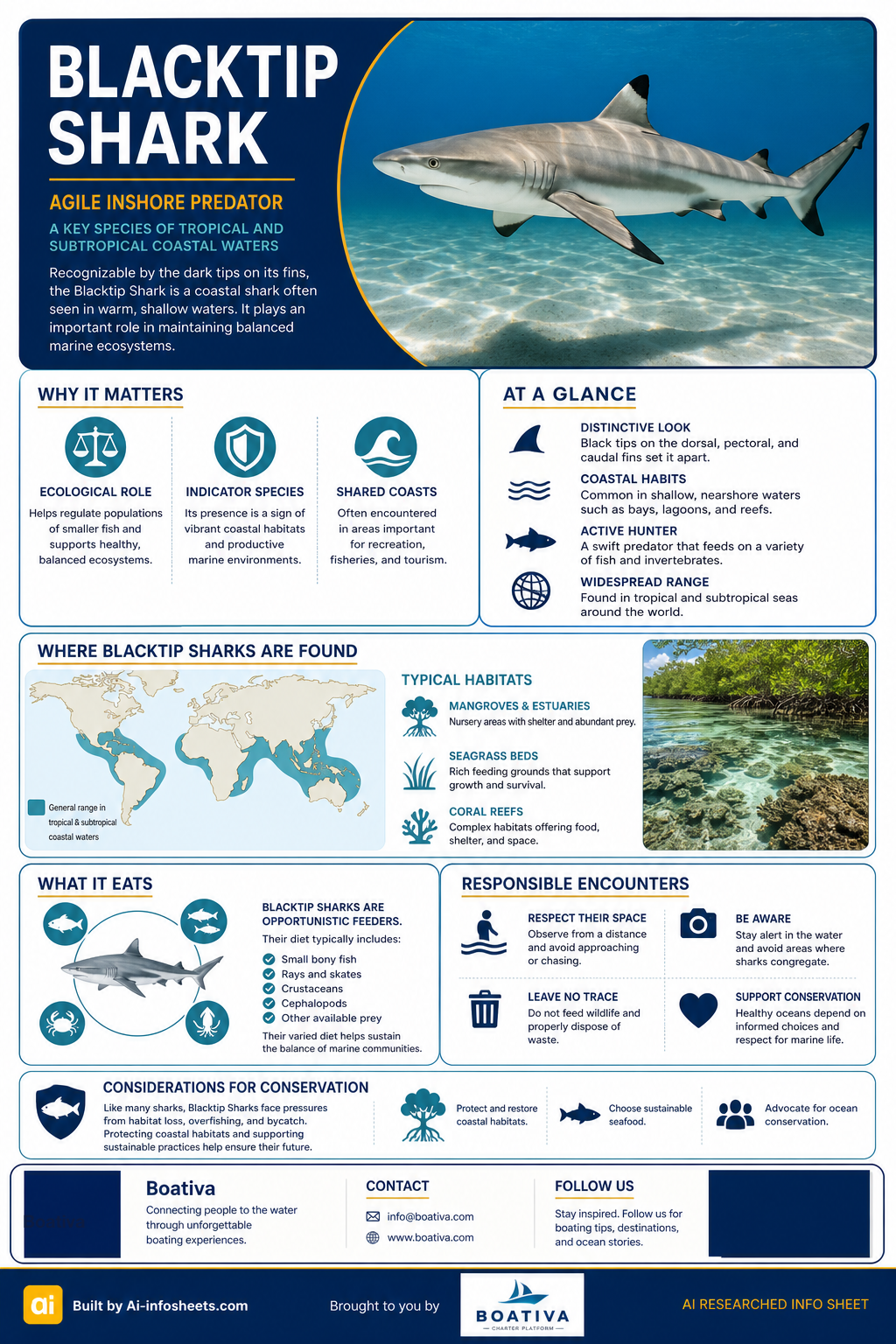


The Blacktip Shark (Carcharhinus limbatus) is an agile and highly recognizable predator of tropical and subtropical coastal waters worldwide. Distinctive for the dark, often black, tips on its fins, particularly the dorsal, pectoral, and caudal fins, this species plays a crucial role in the health and balance of marine ecosystems. Its presence often signals a vibrant and productive coastal environment, making it an important indicator species. Understanding the Blacktip Shark's biology, behavior, and ecological importance is key to promoting responsible interactions and ensuring its continued survival in our oceans.
Why Blacktip Sharks Matter
Blacktip Sharks are more than just impressive predators; they are integral to the well-being of marine environments. Their presence has significant ecological implications, contributing to the balance and health of the seas they inhabit.
Ecological Role
Blacktip Sharks help regulate the populations of smaller fish, preventing overpopulation that could strain resources. By doing so, they contribute to a balanced food web and support healthy, thriving marine ecosystems. Their predatory activities ensure that prey species remain robust and resilient.
Indicator Species
As an indicator species, the presence of Blacktip Sharks in a coastal area is often a positive sign of a vibrant, healthy, and productive marine environment. Their need for specific conditions and prey means that a thriving Blacktip Shark population indicates a well-functioning ecosystem that can support a diverse range of marine life.
Shared Coasts
Blacktip Sharks are frequently encountered in coastal areas that are also popular for human activities such as recreation, fisheries, and tourism. This shared habitat underscores the importance of responsible practices and conservation efforts to minimize human impact and ensure the coexistence of both sharks and humans in these vital marine spaces.
Where Blacktip Sharks Are Found
Blacktip Sharks have a widespread distribution, found globally in tropical and subtropical coastal waters. They exhibit a preference for shallow, nearshore environments, utilizing a variety of habitats throughout their life cycle.
Typical Habitats
Blacktip Sharks are commonly found in several key coastal habitats. Mangroves and estuaries serve as crucial nursery areas, providing young sharks with shelter and abundant prey. Seagrass beds offer rich feeding grounds that support the growth and survival of many marine species, including those Blacktips hunt. Coral reefs provide complex habitats, offering food, shelter, and space for both the sharks and their prey, contributing to the overall biodiversity of these areas.
Coastal Habits
These sharks are frequently observed in shallow, nearshore waters such as bays, lagoons, and reefs. Their adaptability to these varied coastal environments is a testament to their success as a species. This preference for shallow waters makes them more accessible for observation but also more vulnerable to human activities.
Widespread Range
Blacktip Sharks are found in tropical and subtropical seas around the world. This extensive geographical spread highlights their ability to adapt to different oceanic conditions within these warmer climate zones, though their specific distribution can vary based on local environmental factors and prey availability.
What Blacktip Sharks Eat
Blacktip Sharks are opportunistic feeders, meaning they will consume a variety of available prey. This varied diet is crucial for sustaining the balance of marine communities by controlling populations of different species.
Varied Diet
Their diet typically includes small bony fish, which form a significant portion of their meals. They also prey on rays and skates, crustaceans like crabs and shrimp, and cephalopods such as squid and octopuses. This diverse feeding strategy not only ensures their own survival but also helps maintain the health and stability of the marine food web, preventing any single prey species from dominating.
Responsible Encounters and Conservation
Interacting with Blacktip Sharks requires respect and awareness to ensure both human safety and the sharks' well-being. Conservation efforts are also paramount given the pressures these sharks face.
Respect Their Space
When observing Blacktip Sharks, it's crucial to maintain a respectful distance and avoid approaching or chasing them. Disrupting their natural behavior can cause stress and potentially lead to defensive reactions. Responsible wildlife viewing practices prioritize the animals' welfare.
Leave No Trace
To protect marine environments, it's essential not to feed wildlife, including sharks, as this can alter their natural hunting behaviors and make them reliant on human provisioning. Additionally, properly disposing of all waste prevents pollution and protects marine life from harmful debris.
Be Aware
Staying alert in the water and being aware of areas where sharks are known to congregate can help prevent unintended encounters. Understanding shark behavior and habitats allows for safer interactions and minimizes risks for both humans and sharks.
Support Conservation
Like many shark species, Blacktip Sharks face significant pressures, including habitat loss, overfishing, and accidental bycatch. Healthy oceans depend on informed choices and a collective respect for marine life. Protecting and restoring coastal habitats, choosing sustainable seafood, and advocating for ocean conservation are vital steps in ensuring the future of Blacktip Sharks and the ecosystems they inhabit.
By supporting organizations dedicated to marine conservation and educating ourselves and others, we can contribute to a healthier ocean for all its inhabitants. Take action today to protect these incredible predators and their vital marine environments.