
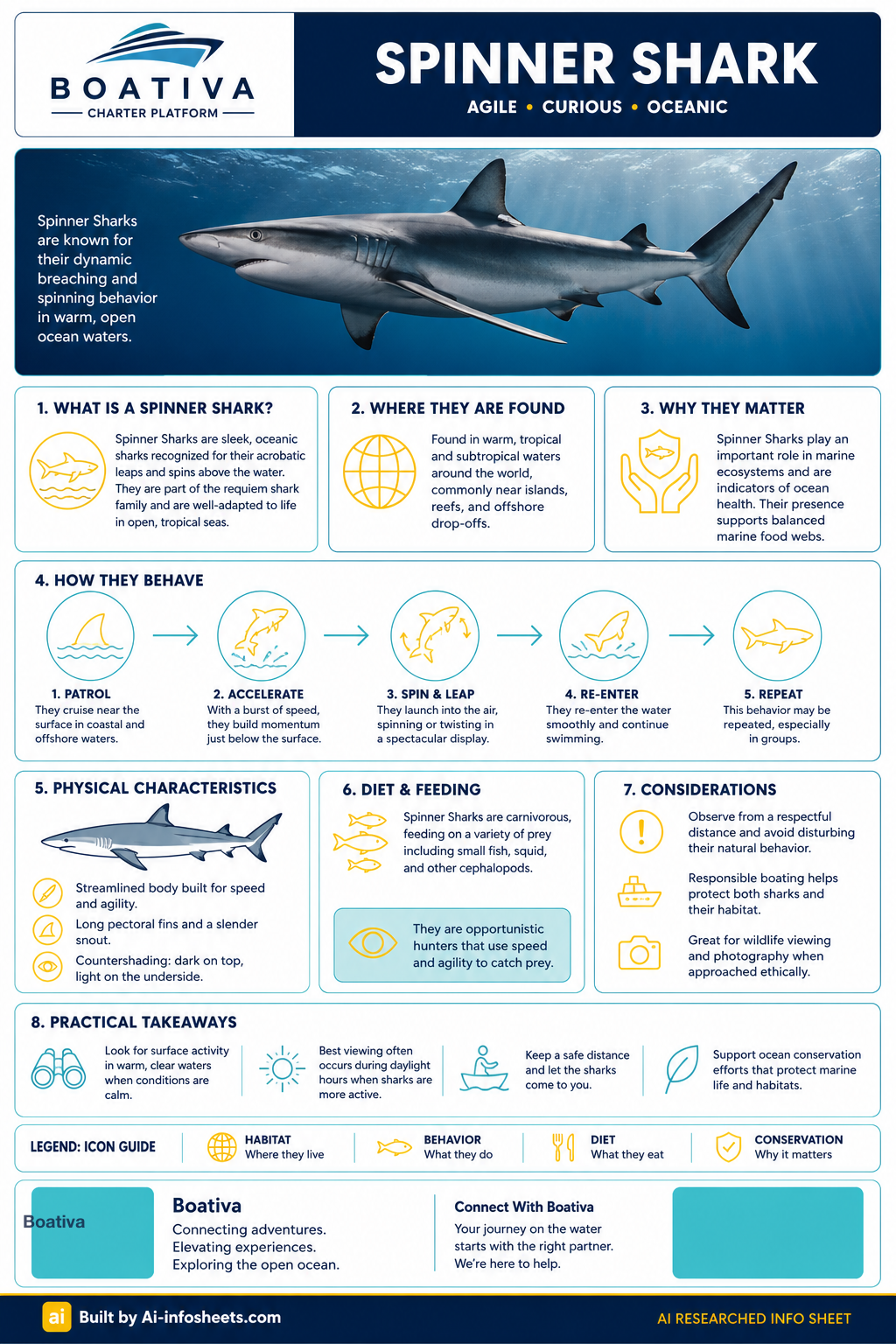


The Spinner Shark (Carcharhinus brevipinna) is a remarkable marine species renowned for its distinctive acrobatic displays. These sleek, oceanic sharks are members of the requiem shark family and are exceptionally adapted to life in the vast, open tropical seas. Their name comes from their spectacular behavior of leaping out of the water and spinning multiple times, a feat often observed during feeding frenzies.
What is a Spinner Shark?
Spinner Sharks are streamlined, fast-moving predators characterized by their slender bodies, long pectoral fins, and a pointed snout. They are often confused with Blacktip Sharks due to similar appearances and breaching behaviors, but Spinner Sharks typically have a more pointed snout and their first dorsal fin is positioned further back. These sharks are recognized for their incredible agility, which allows them to hunt effectively and perform their signature aerial maneuvers. Their physical adaptations, such as a countershaded body—dark on top and light on the underside—provide camouflage in the open ocean, protecting them from both predators and prey.
Where They Are Found
Spinner Sharks thrive in warm, tropical, and subtropical waters across the globe. Their preferred habitats include areas near islands, reefs, and offshore drop-offs, where prey is abundant. They are pelagic sharks, meaning they spend most of their lives in the open ocean, often close to the surface, but can also be found in coastal waters. This wide distribution indicates their adaptability to various oceanic environments, provided the water temperatures are suitable for their needs. They are commonly observed in the Atlantic, Indian, and Pacific Oceans.
Why They Matter
Spinner Sharks are more than just impressive acrobats; they are vital components of marine ecosystems. As apex predators, they help maintain the balance of marine food webs by preying on smaller fish and cephalopods. Their presence is often considered an indicator of ocean health, suggesting a vibrant and productive marine environment. By contributing to the regulation of fish populations, Spinner Sharks play a crucial role in preventing overpopulation of certain species and ensuring the overall stability and diversity of ocean life.
How They Behave
Spinner Sharks exhibit a unique five-step behavioral sequence, particularly during feeding. They first Patrol near the surface in both coastal and offshore waters. Next, they Accelerate with a burst of speed just below the surface, building momentum. This leads to their dramatic Spin & Leap, where they launch into the air, spinning or twisting in a spectacular display, often to disorient or catch prey. Following this, they Re-enter the water smoothly, continuing their swimming. This entire behavior, particularly the spinning and leaping, may be Repeated multiple times, especially when hunting in groups.
Diet & Feeding
Spinner Sharks are carnivorous, with a diet primarily consisting of small fish, squid, and other cephalopods. They are opportunistic hunters, using their incredible speed and agility to capture prey. Their unique spinning and leaping behavior is often a part of their feeding strategy, where they can slash through schools of fish with their mouths open, stunning or injuring multiple prey items before circling back to consume them. This efficient hunting method highlights their adaptation to their pelagic environment, where speed and surprise are key to survival.
Considerations for Observation
Observing Spinner Sharks in their natural habitat can be a breathtaking experience. However, it's crucial to do so responsibly. Always maintain a respectful distance to avoid disturbing their natural behavior. Ethical boating practices, such as slow speeds in known shark areas, help protect both sharks and their habitats. For those interested in wildlife viewing and photography, it's important to approach these activities ethically, ensuring the well-being of the animals is prioritized. The best viewing opportunities often occur during daylight hours in warm, clear, calm waters when sharks are most active. Always allow the sharks to approach you, rather than pursuing them.
Conservation Efforts
Supporting ocean conservation efforts is paramount to protecting Spinner Sharks and their marine environments. These initiatives aim to safeguard marine life and habitats from threats such as overfishing, habitat degradation, and climate change. By promoting sustainable fishing practices, establishing marine protected areas, and raising awareness about the importance of sharks, we can ensure that these magnificent creatures continue to thrive for future generations. Engaging with organizations dedicated to marine research and conservation can make a significant difference in preserving the health of our oceans and the species that inhabit them.
Partner with Boativa to explore the open ocean responsibly and connect with these incredible marine adventures. Your journey on the water starts with the right partner, dedicated to elevating experiences and supporting a healthy marine environment.