
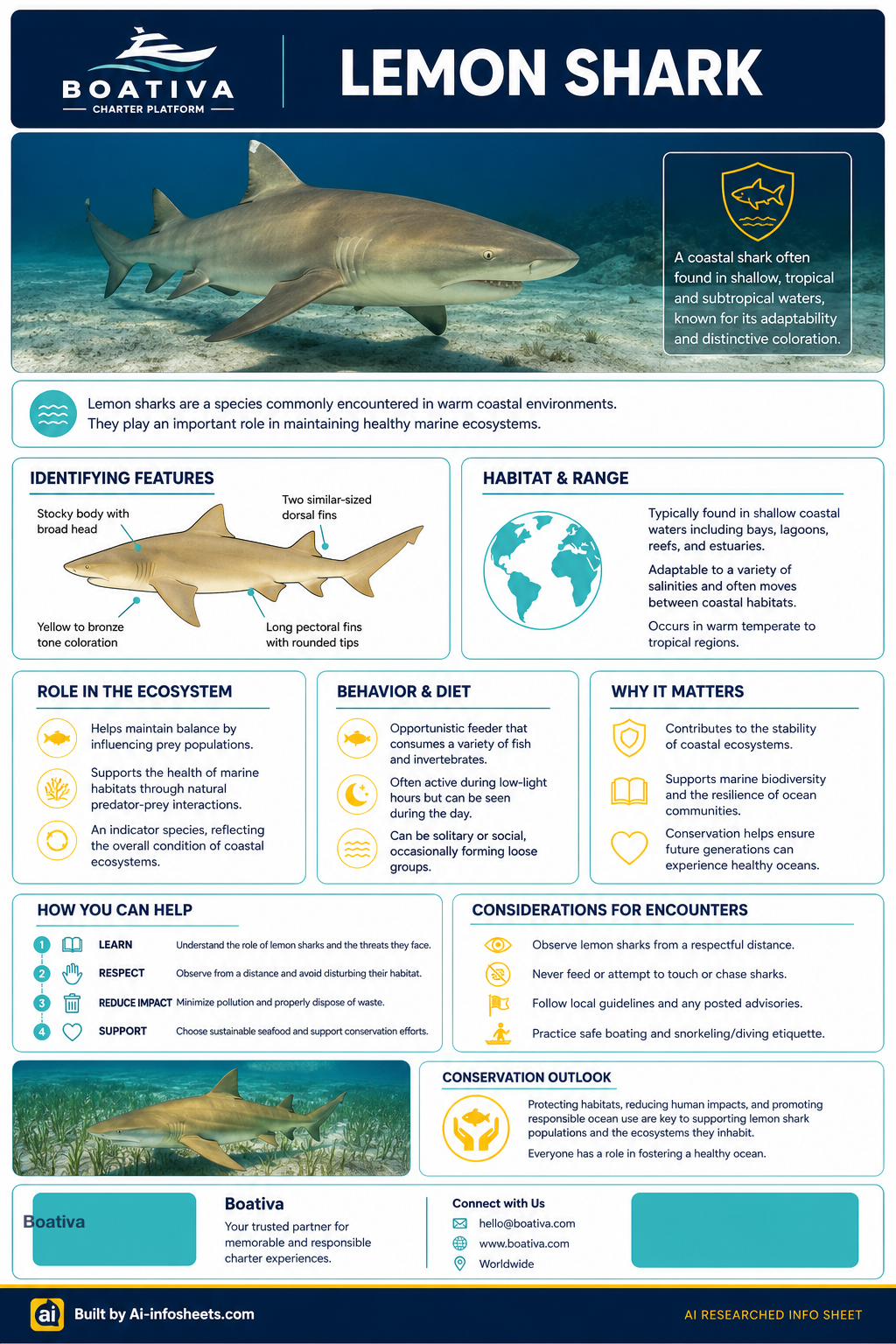


Lemon sharks (Negaprion brevirostris) are a captivating species frequently found in warm coastal environments across the globe. Recognizable by their distinctive yellow-to-bronze coloration, these sharks are highly adaptable to various marine conditions, making them a significant component of their ecosystems. They are not only fascinating to observe but also play a critical role in maintaining the balance and health of marine habitats. Understanding their characteristics, behavior, and conservation needs is essential for fostering a healthy ocean.
Identifying Features of the Lemon Shark
Lemon sharks possess several distinct physical attributes that aid in their identification. Their namesake coloration, ranging from yellow to bronze, helps them camouflage effectively in the sandy, shallow waters they inhabit. These sharks typically have a stocky body complemented by a broad head, giving them a robust appearance. A key distinguishing feature is the presence of two similar-sized dorsal fins, which is less common among other shark species. Additionally, their long pectoral fins feature rounded tips, further contributing to their unique profile and maneuverability in their preferred environments.
Habitat and Range
Lemon sharks are typically found in shallow coastal waters, including diverse environments such as bays, lagoons, reefs, and estuaries. Their adaptability extends to a variety of salinities, allowing them to move between different coastal habitats seamlessly. This flexibility enables them to thrive in complex ecosystems where other species might struggle. Primarily, lemon sharks are encountered in warm temperate to tropical regions around the world, highlighting their preference for warmer waters. This broad distribution underscores their resilience and ability to utilize a wide range of coastal resources.
Behavior and Diet
As opportunistic feeders, lemon sharks have a varied diet that includes a wide array of fish and invertebrates. This diverse diet helps regulate prey populations and contributes to the overall health of their feeding grounds. They are often observed to be active during low-light hours, but it is also common to see them during the day. Lemon sharks can exhibit both solitary and social behaviors; while they may hunt alone, they are also known to occasionally form loose groups, potentially for hunting or social interaction. This flexible social structure further illustrates their adaptability within their environment.
Role in the Ecosystem
The presence of lemon sharks is vital for the stability and health of marine ecosystems. They help maintain ecological balance by influencing prey populations, preventing any single species from dominating and ensuring a diverse food web. Through their natural predator-prey interactions, they support the health of marine habitats, ensuring that ecosystems remain robust and resilient. As an indicator species, the health and population trends of lemon sharks can reflect the overall condition of coastal ecosystems. A thriving lemon shark population often signifies a healthy marine environment, making their conservation crucial.
Conservation Outlook
Protecting lemon shark habitats, reducing human impacts, and promoting responsible ocean use are critical for supporting stable lemon shark populations and the ecosystems they inhabit. Everyone has a role to play in fostering a healthy ocean. This includes supporting sustainable fishing practices, minimizing pollution, and advocating for marine protected areas. By understanding and respecting these magnificent creatures, we can ensure their continued survival and the health of our planet's coastal waters for future generations. Your active participation in conservation efforts makes a tangible difference.