Hurricane Preparedness in Florida: Your Essential 72-Hour Checklist
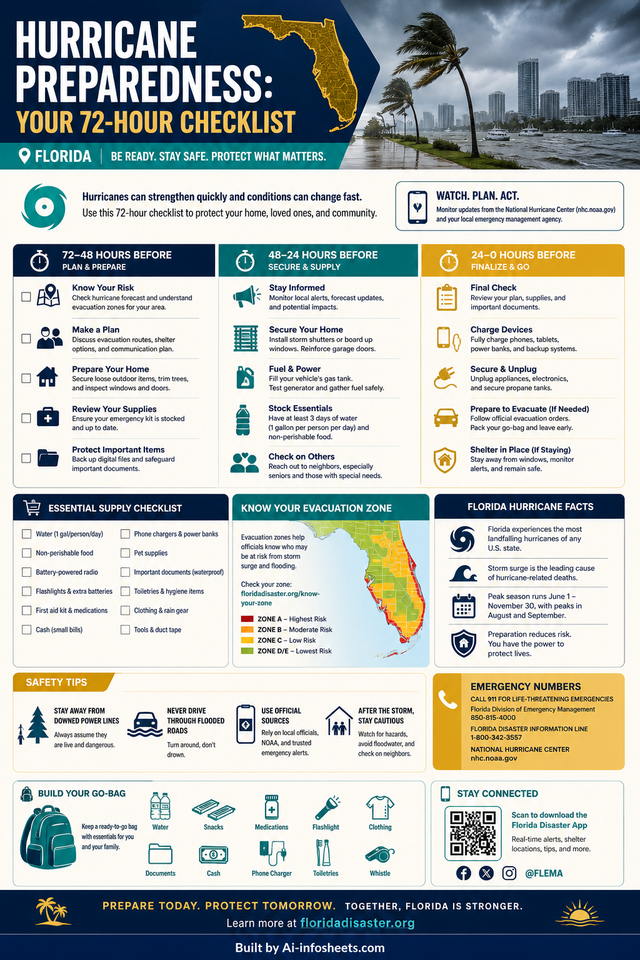
Florida, known for its beautiful coastlines and vibrant communities, is also highly susceptible to hurricanes. The Atlantic hurricane season officially runs from June 1st to November 30th each year, making preparedness not just advisable, but essential for every resident. A proactive approach to hurricane readiness can significantly reduce risks and enhance safety. This 72-hour checklist is designed to guide you through the critical steps needed to secure your property, gather necessary supplies, and establish a clear emergency plan for you and your family, ensuring you are well-equipped to face potential storm impacts. 72 Hours Before Landfall: Immediate Actions Secure Your Property Outdoors Begin by securing anything outdoors that could become a projectile in high winds. This includes patio furniture, garbage cans, grills, trampolines, and any decorative items.…